
For over 50 years, we have dedicated ourselves to providing Industry with best in class wire management solutions and to helping solve mission critical issues.

The needs of today’s schools and universities are changing fast. When it comes to anticipating and meeting those needs, MonoSystems is in a class of its own.
For the past five decades, we’ve made it our business to offer more value to our partners, which in turn provides greater value to their customers.
Choosing the right Industrial Chain Conveyor supplier can influence throughput, maintenance costs, and workplace reliability. In 2026, buyers need more than attractive catalog images or broad production claims. They need evidence from operating facilities, verified specifications, and practical service records. A conveyor may look robust in a showroom, yet perform differently under dust, heat, moisture, or continuous loading.
This guide examines leading suppliers through measurable criteria, including chain strength, material quality, conveyor customization, delivery capability, and after-sales support. It also considers experience with heavy-duty applications, spare-part availability, installation guidance, and documented testing procedures. Suppliers with transparent certifications and traceable manufacturing practices deserve closer attention. So do those that explain limitations clearly.
No supplier is perfect.
Our comparison is designed for engineers, plant managers, procurement teams, and distributors planning investments for 2026. We will review product ranges, technical expertise, industry coverage, and customer feedback without treating marketing language as proof. Factory visits, sample inspections, and maintenance interviews can reveal details that brochures often miss. For example, chain alignment, weld consistency, and access to replacement rollers may determine whether a system runs smoothly after six months.
Some information may remain incomplete.
Market rankings can change as production capacity, regional support, and material costs shift. Therefore, this overview should support due diligence rather than replace it. Buyers should confirm load calculations, safety requirements, warranty terms, and local service conditions before signing contracts. The strongest supplier is not always the largest. It is often the partner that understands your process, answers difficult questions, and improves when problems appear.
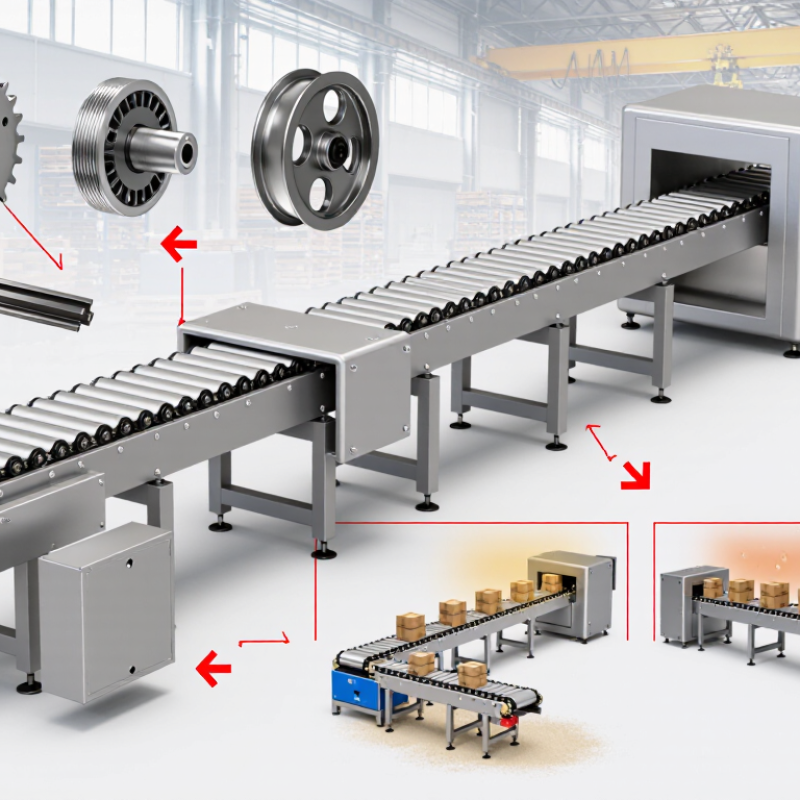
Industrial chain conveyors move heavy materials through factories, warehouses, and processing lines. They use linked metal chains driven by rotating sprockets. The chain carries flights, slats, pallets, or fixtures that support each load.
A motor turns the drive sprocket. Its teeth engage the chain and create continuous movement along a guided path. Return rails carry the empty chain back to the loading point. Depending on the design, conveyors can move boxes, steel parts, bins, or hot components. They handle higher loads than many belt systems, especially where impact and heat are common.
Good performance depends on correct chain tension, alignment, lubrication, and load distribution. During inspections, technicians often check for stretched links, worn sprocket teeth, unusual vibration, and material buildup. Small alignment errors can create loud operation and uneven wear. Keep guards in place.
Industrial chain conveyors are not maintenance-free. A system may appear strong yet fail when side loading or poor cleaning is ignored. I have found that simple inspection records often reveal problems earlier than emergency repairs. Still, each application needs careful review. Chain speed, incline, temperature, and product shape can change the conveyor design. An oversized motor may increase stress instead of improving reliability. Proper installation and practical operator training matter every day.
Industrial chain conveyors use a continuous chain loop driven by sprockets to move pallets, fixtures, containers, or bulk materials. Chain pitch is the distance between adjacent chain pins; larger pitches are generally selected for heavier loads and more demanding conveying conditions.
The chart uses common nominal conveyor-chain pitches. “Approximate pitches per metre” is calculated as 1,000 divided by the pitch in millimetres and is provided as an engineering reference rather than a supplier-specific specification.
Chain conveyors will remain important across many industries in 2026. Their strong chains move heavy, awkward, or hot products through demanding production areas. Automotive plants use them for chassis, engines, tires, and painted parts. Metalworking facilities transport castings, bins, and scrap between processing stations.
Food and beverage factories use corrosion-resistant chain conveyors for packaged goods, trays, and sealed containers. Pharmaceutical plants depend on controlled movement for cartons, bottles, and inspection lines.
Distribution centers also use chain systems for pallets, totes, and oversized parcels. E-commerce growth is increasing demand for flexible conveyor layouts, especially where product sizes change daily.
Smart sensors can monitor speed, load, noise, and chain wear. Still, digital monitoring cannot replace practical maintenance. I have seen small alignment problems become costly stoppages. No system is perfect.
Tips: Match the chain type to the load, temperature, moisture, and cleaning routine. Check sprockets, lubrication, guarding, and transfer points regularly. Leave access space for technicians. Test emergency stops under real operating conditions. Avoid choosing equipment only by maximum capacity; uneven loading may reduce service life. In 2026, useful data matters, but simple inspections still catch problems earlier.
Comparing leading industrial chain conveyor suppliers in 2026 requires more than reviewing catalog prices.
Start with the application. Record load weight, chain speed, conveyor length, incline, operating temperature, and daily running hours.
A supplier that asks for these details shows practical engineering discipline. A supplier that quotes immediately may be guessing.
Inspect the chain design closely.
Compare pitch accuracy, roller hardness, sprocket alignment, frame stiffness, and corrosion protection. Ask for material certificates, load calculations, fatigue test results, and dimensional tolerances.
On a factory floor, small errors create visible problems: uneven movement, rattling sprockets, and product damage.
Request references from facilities with similar loads. Photos help, but maintenance records are stronger evidence.
Service reliability deserves equal attention.
Compare spare-parts availability, response times, installation guidance, and warranty conditions. Check whether drawings are clear enough for your maintenance team.
Ask how the supplier handles chain elongation after extended use. This detail is often overlooked. It should not be.
A lower purchase price may become expensive after repeated stoppages. However, the highest quote is not automatically the safest choice.
No supplier scores perfectly. Your comparison sheet may still contain uncertain data, especially for projected energy use and service life. Mark those assumptions clearly, then ask for field evidence before approving the order.
What Features Define a Reliable Chain Conveyor Manufacturer?
A reliable chain conveyor manufacturer understands the application before suggesting equipment. During plant evaluations, I look for questions about load weight, product shape, speed, temperature, washdown, and working hours. A supplier that asks only for conveyor length may miss serious operating risks. Practical experience appears in small details, such as guarded sprockets, accessible chain tensioners, and smooth transfers between sections. Shortcuts become expensive.
Engineering evidence matters. The manufacturer should provide load calculations, layout drawings, material specifications, and documented testing procedures. Chain selection must match impact, friction, corrosion, and operating temperature. Stainless steel may suit wet areas, while hardened components can support abrasive loads. However, material choice alone does not guarantee performance. Poor alignment can still cause noise, uneven wear, and repeated stoppages. That is where technical discipline matters.
Reliable manufacturers also explain their limits clearly. They should offer traceable parts, installation guidance, maintenance schedules, and responsive service after delivery. Ask for inspection records, safety documentation, and realistic lead times. A polished brochure is not proof. Factory visits, sample testing, and conversations with maintenance teams reveal more. No supplier gets everything right. Even experienced engineers can underestimate cleaning time or future capacity. Honest reviews of those assumptions often separate a dependable partner from a merely persuasive seller.
| Evaluation Dimension | Reliable Industry Benchmark | What a Reliable Manufacturer Provides | Buyer Verification Method | Priority |
|---|---|---|---|---|
| Load and Capacity Engineering | Capacity must be calculated from product weight, pitch, speed, accumulation, incline, and duty cycle rather than selected from a standard catalog size. | A documented calculation showing chain pull, allowable working load, motor torque, safety factor, and maximum accumulated product load. | Request the conveyor calculation sheet and compare it with actual product weight, spacing, speed, and operating hours. | Critical |
| Chain and Sprocket Selection | The chain, sprockets, guides, and wear strips must be matched as one system; material selection depends on load, temperature, moisture, chemicals, and sanitation requirements. | Traceable chain specifications, sprocket material details, wear-strip material, rated working load, and replacement-part references. | Check material certificates, chain identification, sprocket tooth profile, and compatibility between chain and guide components. | Critical |
| Speed Control | Variable-speed operation is normally required when the process includes accumulation, indexing, product transfer, or changing production rates. | A defined speed range, drive sizing data, variable-frequency-drive compatibility, and documented acceleration and deceleration settings. | Review the control philosophy and perform a factory or site test at minimum, nominal, and maximum operating speeds. | High |
| Frame and Structural Integrity | The frame should be designed for operating load, impact, thermal movement, support spacing, and installation conditions, not only static self-weight. | General arrangement drawings, frame material and thickness, support-load data, deflection assumptions, and weld-quality requirements. | Review structural drawings and inspect welds, levelness, support spacing, and frame deflection during commissioning. | Critical |
| Safety Compliance | The system should address guarding, emergency stops, accessible nip points, lockout procedures, warning labels, and electrical safety requirements. | A documented risk assessment and compliance package referencing applicable requirements such as ASME B20.1, ISO 12100, ISO 13850, and IEC 60204-1 where applicable. | Request the risk assessment, safety-circuit drawings, emergency-stop test records, and applicable conformity documentation. | Critical |
| Sanitary and Corrosion Resistance | Food, pharmaceutical, chemical, and outdoor applications require materials, finishes, drainage, and cleaning methods suited to the environment. | Specified stainless-steel grade, surface-finish information, drainable design, compatible lubricants, and cleaning or washdown limitations. | Confirm material certificates, surface-finish records, chemical-compatibility data, and the recommended cleaning procedure. | High |
| Lubrication and Wear Management | Wear parts should have a defined service interval based on load, speed, contamination, temperature, and operating hours. | Lubrication points, lubricant specifications, chain-elongation limits, wear-strip replacement criteria, and preventive-maintenance schedules. | Review the maintenance manual and confirm that wear indicators and replacement procedures are practical for site personnel. | High |
| Noise and Vibration Control | Noise and vibration should be evaluated during normal operation, especially at transfers, sprockets, curves, and high-speed sections. | Noise-control design features, alignment tolerances, chain-tension requirements, and optional factory noise or vibration measurements. | Conduct an acceptance test under normal production load and record abnormal noise, vibration, and tracking behavior. | Medium |
| Controls and Integration | Industrial conveyors should support clear control states, interlocks, fault reporting, and communication with the plant control system. | I/O list, electrical schematics, PLC or drive interface details, safety-circuit architecture, alarms, and communication protocol information. | Test start permissives, downstream and upstream interlocks, fault recovery, emergency stops, and communication signals. | Critical |
| Factory Acceptance Testing | A repeatable factory acceptance test should verify dimensions, speed, load behavior, safety functions, controls, and product handling before shipment. | A signed FAT procedure with measurable acceptance criteria, test records, punch-list control, and change-management records. | Attend the FAT remotely or on site and require closure of all critical punch-list items before delivery. | High |
| Installation and Commissioning | Installation quality affects chain tracking, sprocket alignment, product transfer, noise, and service life. | Installation drawings, leveling and alignment tolerances, anchoring details, startup checklist, and trained commissioning support. | Use a site commissioning checklist covering alignment, chain tension, guarding, controls, emergency stops, and loaded operation. | High |
| Spare Parts Availability | Critical wear and drive components should be identifiable and available for the expected service period. | Parts list with item numbers, recommended start-up spares, lead times, interchangeability information, and end-of-life notification practices. | Obtain written lead-time commitments for chain, sprockets, bearings, wear strips, motors, sensors, and safety components. | High |
| Documentation Quality | Complete technical documentation should be delivered in the operating language before final handover. | Approved drawings, manuals, wiring diagrams, bills of materials, certificates, maintenance schedules, and software backups where applicable. | Use a document register and withhold final acceptance until required revisions and as-built documents are complete. | High |
| Quality Management | A controlled quality system should manage design changes, supplier controls, inspection records, nonconformities, and corrective actions. | Current quality-management certification or equivalent documented procedures, inspection plans, traceability records, and corrective-action reports. | Review the quality certificate scope, audit selected records, and verify that the certificate applies to the manufacturing location. | High |
| Lifecycle Cost | Total cost should include energy, lubrication, wear parts, downtime risk, maintenance labor, spare parts, and expected operating life. | A total-cost-of-ownership estimate with assumptions for duty cycle, maintenance intervals, consumables, service response, and replacement components. | Compare at least three technically equivalent proposals using the same production, labor, energy, and maintenance assumptions. | Critical |
Selecting the right industrial chain conveyor supplier starts with your application, not a catalogue. Define load, speed, pitch, operating temperature, washdown exposure, and shift pattern. A conveyor moving hot castings needs different chain steel than one carrying packaged food. The wrong pitch can create vibration, noise, and premature wear.
The 2024 MHI Annual Industry Report identifies labor availability and operational efficiency as major automation concerns. This makes reliable conveyor performance more valuable than a low purchase price. Ask suppliers for chain fatigue data, sprocket life estimates, motor sizing calculations, and documented testing methods. ISO 9001 certification supports process control, but it does not prove application suitability. Request references from plants with similar loads and environments. A polished brochure is not evidence.
Tips: Compare total cost over five years. Include energy use, lubrication, spare links, downtime, installation, and training. Check whether replacement parts are locally available. Confirm guarding, emergency stops, and inspection access against applicable safety requirements. During supplier reviews, measure actual product samples when possible. Small differences in plate thickness matter. I have seen buyers overlook return-side clearance, then modify steelwork after delivery. That mistake is avoidable, although every site has constraints that standard checklists miss. Also, challenge optimistic service-life claims. Published figures often assume cleaner conditions than your factory provides. Use a pilot section before approving a full line.