
For over 50 years, we have dedicated ourselves to providing Industry with best in class wire management solutions and to helping solve mission critical issues.

The needs of today’s schools and universities are changing fast. When it comes to anticipating and meeting those needs, MonoSystems is in a class of its own.

For the past five decades, we’ve made it our business to offer more value to our partners, which in turn provides greater value to their customers.
LED mood lighting now appears in homes, hotels, restaurants, and wellness spaces. Buyers want more than vivid colors. They need reliable performance, attractive design, and products that fit their markets. A capable LED Mood Light Manufacturer should explain how its lights handle brightness control, color consistency, heat, and everyday use.
Small details matter. A warm glow can change a bedroom’s feel, while uneven color can spoil an entire installation. Global buyers should compare dimming behavior, control options, materials, and product testing. Ask for samples and clear technical documents. Check whether specifications match the products delivered. Claims alone are not enough.
This guide introduces manufacturers serving international buyers and outlines practical points for evaluating them. It considers product range, customization, production capability, communication, and quality processes. Certifications and market requirements can vary, so buyers should confirm current documents for their intended destination. No supplier is perfect. Even a polished sample may not reveal how a product performs after months of use. That is worth remembering. Careful questions, documented requirements, and realistic testing can reduce surprises and support better purchasing decisions.
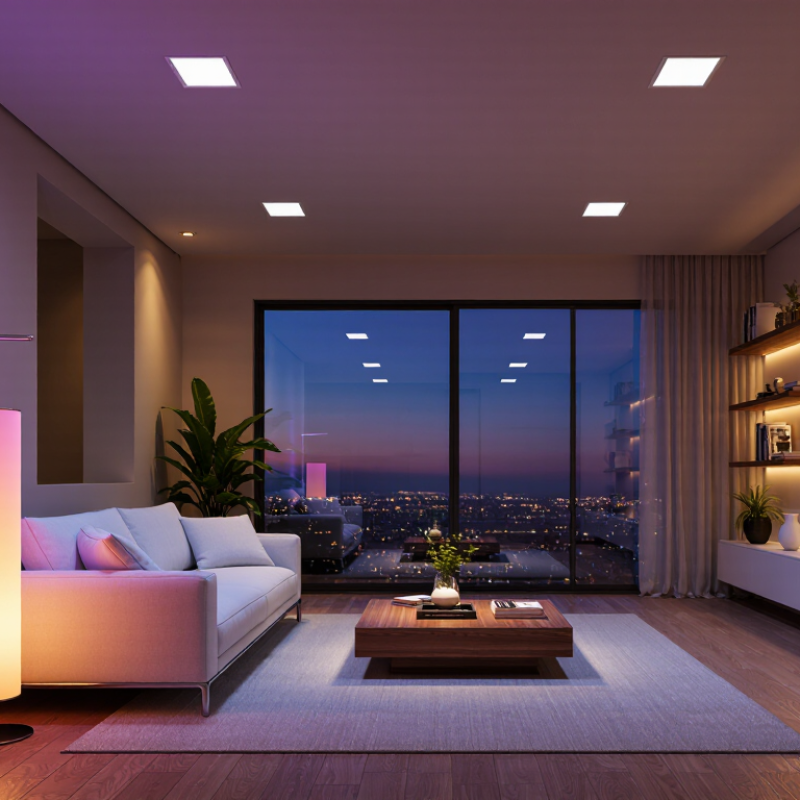
LED mood lights use color, brightness, and diffusion to shape the feeling of a room. They are usually designed for ambient use, not detailed reading or work. A soft glow behind a monitor can reduce visual contrast, while a small bedside lamp can make a room feel quieter. The result depends on shade, wall color, distance, and brightness. Small changes matter.
Common product types include fixed-color lamps, tunable white lights, RGB color-changing fixtures, and portable rechargeable lights. Fixed-color models offer a consistent tone, such as warm amber. Tunable white products shift between warmer and cooler whites. RGB models create saturated colors and often support preset scenes or app control. Portable versions suit shelves, travel, or temporary displays. Some products also respond to music, though the effect can feel distracting in a quiet room.
For buyers comparing products, check the dimming range, color consistency, diffuser quality, control method, and heat handling. Ask for operating samples, not only polished photographs. A sample may look impressive in a showroom and harsh beside a pale wall. That is worth testing. Specifications help, but they do not fully describe how a light feels at home.
LED mood light manufacturers begin with the intended scene: a soft bedside glow, a color-changing shelf, or indirect light behind a television. Engineers then select LED packages, drivers, and optical materials to produce smooth color transitions without visible dots. A frosted diffuser helps blend light, but it can also reduce brightness. Small details matter.
During development, teams test color consistency, heat, dimming behavior, and control response. A compact aluminum heat spreader can limit temperature rise inside a plastic housing. Firmware is tuned so warm white does not suddenly shift green at low brightness. The U.S. Department of Energy reports that LED lighting uses at least 75% less energy and lasts up to 25 times longer than incandescent lighting. These figures describe LED lighting broadly, not every mood-light product. Actual performance depends on components and operating conditions.
Production checks may include burn-in, repeated color changes, and inspection of diffuser seams and cable connections. Manufacturers also measure color rendering and brightness across sample units, because a small component variation can alter the perceived hue. Testing is useful, but it cannot remove every inconsistency. A room’s wall color and distance from the lamp can change how the same setting looks. That part is easy to underestimate.
Illustrative correlated color temperature (CCT) settings commonly used to create different lighting atmospheres.
How to read it: Lower CCT produces a warmer appearance, while higher CCT produces a cooler, more daylight-like appearance. These are example design settings, not universal requirements.
2026 Best LED Mood Light Manufacturers for Global Buyers
Criteria for Evaluating Manufacturers in the 2026 Global Market
In 2026, buyers should evaluate LED mood light manufacturers on measurable performance, not attractive product photos. Request data for color consistency, dimming range, flicker, and power use. A warm amber setting should look similar across several units, not shift noticeably between samples. Ask how the manufacturer tests products and whether test records match the exact model offered. Clear answers matter.
Check materials and production controls, too. Review housing finish, cable strain relief, heat management, and control compatibility. Request sample units and run them at low brightness for several hours. Note color drift, unexpected noise, or controls that respond slowly. Confirm production capacity, lead times, packaging details, and available quality records. A well-designed sample is useful, but it cannot guarantee every later batch will match.
Tips: Use the same test conditions for every supplier. Photograph samples beside a neutral white reference, and record brightness settings. Ask for written specifications before comparing quotes. No scorecard removes uncertainty; samples may differ from mass production, and that deserves a follow-up check. A careful buyer should leave room for revision.
A practical, brand-neutral framework for comparing suppliers of LED mood lights. Suggested weights are buyer planning guidelines, not industry-wide benchmarks.
| Evaluation Dimension | Suggested Weight | What Buyers Should Evaluate | Evidence to Request or Verify | Why It Matters |
|---|---|---|---|---|
| Product Safety and Regulatory Readiness | 18% | Check whether the finished product is designed and documented for the destination market. Requirements depend on product construction, power supply, wireless functions, and country of sale. | Applicable test reports and declarations; electrical safety and EMC documentation; market-specific records. For EU sales, confirm applicable requirements rather than treating a CE mark alone as a test report. | Incomplete or inapplicable compliance documentation can delay customs clearance, listing, or market access. |
| Light Quality and Photobiological Safety | 14% | Assess color consistency, dimming behavior, flicker performance, glare, and suitability for the intended indoor use. Review photobiological risk assessment where relevant. | Photometric and color measurements, test conditions, dimming test results, and an applicable photobiological safety assessment such as IEC 62471 when required. | Mood lighting depends on comfortable, predictable light output as well as visual appearance. |
| Reliability and Lifetime Substantiation | 14% | Evaluate thermal design, driver quality, operating limits, warranty terms, and how lifetime or lumen-maintenance claims are supported. | Reliability test plans and results, warranty policy, failure analysis process, and clearly stated test conditions. LM-80 data and TM-21 projections may support LED package or module lumen-maintenance claims, but do not by themselves establish whole-product lifetime. | Credible, well-qualified claims help buyers compare products and manage returns and replacement costs. |
| Materials and Environmental Compliance | 10% | Review material traceability and the supplier’s process for tracking restricted substances and product-related environmental obligations in each target market. | Material declarations, supplier records, and applicable conformity documentation. For EU products, assess obligations under RoHS and REACH as applicable to the product and supply chain. | Documented material controls reduce compliance and supply-chain risks. |
| Design, Functions, and User Experience | 10% | Compare color modes, brightness range, controls, timers, memory behavior, power-loss recovery, and ease of use. For connected products, assess app support and update practices. | Production samples, operating instructions, function tests, app and firmware documentation, and a defined process for software or firmware updates. | Clear controls and dependable functions are important to customer satisfaction and product reviews. |
| Customization and Engineering Capability | 9% | Confirm capabilities for housing, finish, packaging, light settings, control interfaces, and market-specific electrical configurations. | Approved drawings, sample-development process, engineering change controls, tooling terms, and written confirmation of product specifications. | Formal change control helps ensure samples, approved specifications, and mass production remain aligned. |
| Production Quality Management | 9% | Review incoming-material inspection, in-process checks, final inspection, traceability, corrective action, and control of nonconforming products. | Quality procedures, inspection records, sample test reports, lot traceability examples, and corrective-action records. Verify any claimed management-system certification and its scope. | Consistent quality processes help limit defects across production batches. |
| Capacity and Supply Continuity | 7% | Assess realistic production capacity, component sourcing, seasonal planning, lead-time assumptions, and contingency plans for supply interruptions. | Capacity and lead-time statements tied to order assumptions, component risk reviews, production schedules, and documented continuity plans. | Capacity claims are most useful when supported by current constraints and a clear delivery plan. |
| Packaging, Shipping, and Export Readiness | 5% | Check protective packaging, carton specifications, shipping marks, export documents, and the supplier’s ability to support the buyer’s preferred shipping terms. | Packaging specifications, transit-test results where available, sample shipping documents, carton measurements, and written Incoterms® details for the quotation. | Suitable packaging and complete documentation help reduce transit damage and shipment delays. |
| Commercial Transparency and After-Sales Support | 4% | Compare quotation scope, minimum order quantities, payment terms, spare-parts availability, response times, and responsibility for warranty claims. | Itemized quotations, written warranty terms, service contacts, spare-parts policy, and a clear process for handling complaints and returns. | Transparent terms make supplier comparisons more reliable and clarify support after delivery. |
How to use the framework: Score each dimension against the buyer’s requirements, then apply the suggested weight. Confirm applicable regulations and test requirements with qualified compliance professionals for each destination market; requirements can vary by product configuration and jurisdiction.
Comparing LED mood light manufacturers means looking beyond color effects. Check their color temperature range, dimming smoothness, color rendering, and control options. Ask how they test light consistency across production batches. A warm amber setting should look even across a wall, not patchy near the corners. The International Energy Agency’s Energy Efficiency 2023 report notes that LEDs account for around half of global lighting sales. That shift makes dependable controls and efficient designs more important to buyers.
Manufacturers differ in their strengths. Some offer flexible shapes and small production runs; others focus on stable output, custom housings, or app-based controls. Request test reports for flicker, thermal performance, and color consistency, plus clear details on warranty coverage and replacement parts. A polished sample is not proof of reliable mass production. I have seen specifications look strong on paper, while real-world dimming feels uneven. That deserves a closer look.
Tips: Test several units at low brightness and after extended use. Compare the same color setting across samples. Ask for documented quality checks, not just a product brochure.
Global buyers should verify more than a mood light’s color range and catalog photos. The U.S. Department of Energy reports that residential LEDs use at least 75% less energy and can last up to 25 times longer than incandescent lighting. That efficiency claim does not guarantee good color, safe operation, or stable dimming. Ask manufacturers for test reports covering color rendering, color temperature, flicker, heat management, and control compatibility. Check that report models match the exact product and components being quoted. Small details matter.
Request samples from the production configuration, then test them at low and high brightness. Watch for visible flicker, uneven color across the diffuser, buzzing, and excessive heat after several hours. Ask for documented quality-control steps, component traceability, warranty terms, and production lead times. A polished report helps, but it is not the product. Have an independent laboratory verify key claims when order value or risk justifies the cost. Confirm that product documentation fits the destination market’s requirements. Do not rely on a certificate image alone. It can be incomplete. A supplier may answer quickly yet provide vague evidence; that is a reason to pause, not proof of poor quality. Compare written answers with sample performance before approving a bulk order.