
For over 50 years, we have dedicated ourselves to providing Industry with best in class wire management solutions and to helping solve mission critical issues.

The needs of today’s schools and universities are changing fast. When it comes to anticipating and meeting those needs, MonoSystems is in a class of its own.

For the past five decades, we’ve made it our business to offer more value to our partners, which in turn provides greater value to their customers.
China’s titanium sheet market serves aerospace, chemical processing, marine equipment, medical manufacturing, and other demanding industries. Yet a supplier list is only a starting point. This guide to China’s top 10 Titanium Metal Sheet suppliers helps buyers compare capabilities, documentation, and communication before requesting quotations.
A useful comparison looks beyond price. Check available grades, sheet thicknesses, width and length tolerances, surface condition, and whether custom cutting is offered. Ask for current mill test certificates, heat or batch traceability, and inspection details. These records help confirm that delivered material matches the purchase specification. For critical applications, buyers should also clarify testing methods, packaging, lead times, and export experience. Details matter.
Supplier claims deserve careful review. A polished website does not prove consistent production, and a low quotation may exclude testing, packing, or freight. Request recent product evidence and confirm that certificates correspond to the actual batch. Independent audits or sample inspections may be appropriate, depending on risk and order size. No ranking can replace that work. This list should therefore be treated as a practical shortlist, not a guarantee of quality. Capabilities change, and available evidence can be incomplete. Compare suppliers against your own drawings, standards, and delivery needs, then document unresolved questions before placing an order. One overlooked tolerance can turn a promising sheet into costly rework. Start with evidence.
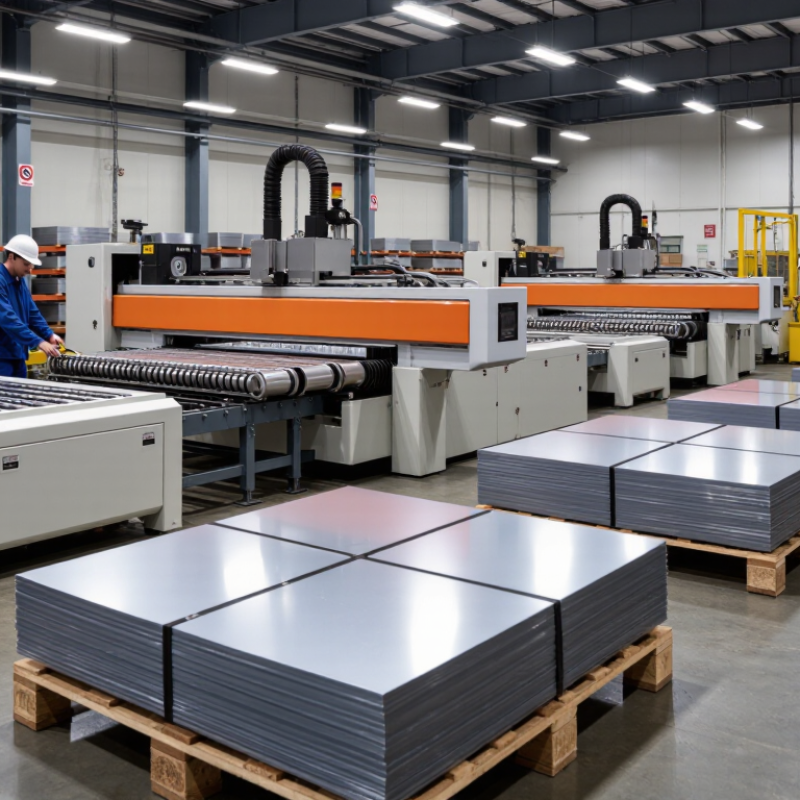
Titanium metal sheets are valued for combining low weight with useful strength and strong corrosion resistance. A thin, stable oxide layer helps protect the surface in many environments. The protection is not universal; temperature, chemicals, and crevice conditions matter. Sheets are supplied in different grades, thicknesses, and finishes, and these choices affect forming and service performance. Small details count.
In industry, sheets may become aircraft panels, heat-exchanger parts, marine components, or chemical-processing equipment. Their relatively low density can reduce structural weight, while corrosion resistance may help extend service life. However, titanium is not automatically the best choice. It can cost more than common steels, and fabrication requires suitable tooling and controlled welding practices. Engineers should check the grade against the actual load, operating temperature, and exposure conditions. Published data should be verified for the specific material and finish.
Tips: Confirm thickness and grade on the material certificate, then inspect the sheet for dents, scratches, and uneven edges. Ask how it will be cut and joined before ordering. Keep surfaces clean during fabrication; embedded iron particles can cause staining or corrosion concerns. A practical lesson: choosing by price alone can lead to rework.
When comparing titanium sheet suppliers in China, look beyond quoted price and catalog claims. Request a recent mill test certificate and check whether it identifies the grade, heat number, chemical composition, and mechanical properties. Match these details against your drawing and intended application. Ask how the supplier controls thickness, flatness, and surface finish; a small variation can complicate forming or welding. Details matter.
Evaluate traceability and inspection practices, too. A reliable supplier should explain how material is tracked from incoming stock to packing, and how dimensional checks are recorded. Request sample inspection data or arrange an independent inspection when order value or risk justifies it. Clarify minimum order quantities, production lead time, and protective packaging. Thin sheets can arrive scratched or distorted if packaging is weak. Good documentation helps, but it cannot replace consistent production.
Tips: Send a clear specification, including tolerances, sheet size, finish, and required documents. Ask one practical question about a past quality issue and how it was corrected. Compare answers across suppliers, not just their certificates. If details are vague, pause and verify; even a polished quotation may leave important gaps. I would still confirm a sample before placing a large order, since stated capability and actual batch consistency can differ.
China’s titanium sheet supply base spans integrated mills, specialist processors, and regional stockholders. These ten profiles describe useful supplier strengths, not a verified ranking. An integrated producer may offer tighter control over melting, rolling, and inspection. An aerospace-focused supplier typically emphasizes traceability and consistent thickness records. Ask for supporting documents. A chemical-equipment specialist may handle corrosion-resistant grades and larger sheet formats. A thin-sheet processor focuses on narrow gauges, where flatness and edge quality matter. A wide-sheet producer can serve tanks or fabrication shops, but transport limits should be checked early.
A custom-cut supplier reduces trimming waste and can provide sheets ready for workshop use. An export-oriented supplier may be experienced with packing and shipping documentation. Still, confirm details directly.
A small-batch processor can suit prototypes, though lead times may vary. A finishing specialist offers options such as pickling or polishing, with surface samples worth reviewing.
Finally, a stockholder can ship common sizes quickly, but may carry fewer grades. Compare certificates, tolerances, available dimensions, and inspection methods before choosing.
A polished brochure is not enough. Some supplier descriptions remain incomplete until a sample is tested.
When comparing China’s titanium sheet suppliers, product range is more than a list of grades. Check whether a supplier can provide the required alloy, thickness, width, and surface finish. A mill offering thin sheet for formed parts may not suit heavy plate applications. Ask for dimensional tolerances and sample inspection records. Details matter.
Manufacturing capacity should be judged by repeatability, not just a large factory or impressive monthly figure. Confirm available rolling and finishing processes, typical lead times, and how the supplier handles small trial orders. For a production run, ask whether the same equipment and inspection steps apply across batches. Capacity claims can be hard to compare, so request figures tied to a specific thickness and order size.
Certifications also need careful review. Check the certificate’s scope, validity, and issuing body, then compare it with the actual product and facility. Request a batch-specific test report showing chemistry and mechanical properties, rather than relying on a general brochure. A certificate alone does not prove every sheet meets your specification. I would also verify traceability from the material label to the shipping documents; this step is easy to overlook, and paperwork can be incomplete. That is not always a supplier’s fault, but it deserves a clear answer.
| Comparison Slot | Product Range Benchmark | Manufacturing Capacity | Certification and Quality Checks | Information to Confirm Before Purchase |
|---|---|---|---|---|
| Supplier 1 (anonymous) | Common sheet grades to check: commercially pure titanium Grades 1–4 and alloy Grade 5 (Ti-6Al-4V), where offered. | Supplier-specific capacity is not verified or disclosed in this comparison. | Request a current quality-management certificate and a material test certificate traceable to the supplied heat or lot. ASTM B265 is a relevant sheet-and-plate specification. | Available grades, sheet versus plate limits, thickness and width tolerances, monthly output, and lead time. |
| Supplier 2 (anonymous) | Check whether commercially pure grades and titanium alloy grades are both available; do not assume every grade is stocked. | Supplier-specific capacity is not verified or disclosed in this comparison. | Verify certificate validity and scope directly with the issuing body. ISO 9001 is a quality-management-system standard, not a product-grade certificate. | Mill or service-center role, in-house rolling capability, finishing processes, and traceability documentation. |
| Supplier 3 (anonymous) | For aerospace-related inquiries, ask specifically about Grade 5 and whether Grade 23 (Ti-6Al-4V ELI) is available. | Supplier-specific capacity is not verified or disclosed in this comparison. | Request the applicable material specification, inspection records, and lot-specific chemical and mechanical test results. | Grade availability, melting-source traceability, inspection plan, and acceptance criteria. |
| Supplier 4 (anonymous) | Confirm whether the range covers standard sheet dimensions or includes cut-to-size supply. | Supplier-specific capacity is not verified or disclosed in this comparison. | Check whether the supplier can provide certificates required by the buyer’s end-use sector; certifications are not interchangeable. | Maximum sheet dimensions, cutting tolerances, edge condition, flatness, and packaging method. |
| Supplier 5 (anonymous) | Ask whether products are supplied to ASTM B265 or another agreed material specification and grade. | Supplier-specific capacity is not verified or disclosed in this comparison. | Match the certificate’s stated standard, grade, condition, and lot number to the purchase order and delivered material. | Standard edition, delivery condition, surface finish, and whether third-party inspection is supported. |
| Supplier 6 (anonymous) | Confirm the distinction between commercially pure titanium sheet and titanium alloy sheet in quotations and certificates. | Supplier-specific capacity is not verified or disclosed in this comparison. | Request documented chemical composition and mechanical properties for the actual production lot. | Sampling frequency, test method, report format, and retention of traceability records. |
| Supplier 7 (anonymous) | Ask about availability of thin-gauge sheet, thicker material sold as plate, and custom-cut formats. | Supplier-specific capacity is not verified or disclosed in this comparison. | Verify the supplier’s quality-system certificate, scope, facility, and expiry date with the issuer. | Minimum order quantity, thickness range, width range, production versus stock availability, and lead time. |
| Supplier 8 (anonymous) | Confirm whether surface-finished, pickled, or other specified surface conditions can be supplied. | Supplier-specific capacity is not verified or disclosed in this comparison. | Specify surface and inspection requirements in the order; request records demonstrating conformity. | Surface roughness or finish definition, defect limits, protective film, and handling controls. |
| Supplier 9 (anonymous) | Check whether the supplier can source or manufacture the exact grade and dimension required rather than offering a nominal substitute. | Supplier-specific capacity is not verified or disclosed in this comparison. | For regulated applications, confirm any required sector-specific quality approvals independently; ISO 13485 and AS9100 have distinct scopes. | Approved-source status, change-control process, nonconformance handling, and audit availability. |
| Supplier 10 (anonymous) | Compare offers only after aligning grade, governing specification, dimensions, condition, and inspection requirements. | Supplier-specific capacity is not verified or disclosed in this comparison. | Require a lot-specific material test certificate and verify any additional inspection or certification requirements before order placement. | Quoted capacity basis, delivery schedule, export documentation, payment terms, and warranty for conformity. |
When comparing China’s titanium sheet suppliers, verify the material grade, dimensions, and stated tolerances against your drawings. Ask for a mill test report linked to the sheet’s heat or batch number. The number should match the product marking and packing records. Review recent inspection data, not just a polished sample. If the application is demanding, arrange independent testing for composition and mechanical properties. A neat certificate is useful, but it does not prove every sheet is consistent.
Tips: Request a small sample and inspect its surface under clear light. Check thickness at several points with a calibrated gauge. Ask how the supplier prevents mix-ups between grades during storage and cutting. Keep written records of agreed specifications.
Before choosing a supplier, discuss packaging, lead time, and how defects are handled. Confirm that sheets will arrive protected from moisture, scratches, and handling damage. Compare quotations only after aligning grade, thickness, finish, and inspection scope. A lower price may reflect different testing or tolerances. That is not always obvious at first. I would also ask for clarification when documents seem incomplete; it can feel awkward, but assumptions are harder to fix after delivery. Test communication with a specific technical question before committing to a larger order.