
For over 50 years, we have dedicated ourselves to providing Industry with best in class wire management solutions and to helping solve mission critical issues.

The needs of today’s schools and universities are changing fast. When it comes to anticipating and meeting those needs, MonoSystems is in a class of its own.

For the past five decades, we’ve made it our business to offer more value to our partners, which in turn provides greater value to their customers.
In the evolving energy landscape, the adoption of a Compact Substation is crucial for enhancing efficiency. Dr. Emily Carter, a leading expert in energy infrastructure, emphasizes, “Compact Substations are revolutionizing how we manage energy distribution.” These innovative systems are designed to optimize space and resources while providing reliable power.
Compact Substations minimize the footprint needed for energy distribution. Their reduced size not only saves land but also lowers installation costs. For urban areas, this is a game-changer. However, the shift to compact designs also poses challenges. Engineers must balance efficiency with the need for robust performance.
The need for enhanced energy solutions is pressing. Traditional substations can be cumbersome and inefficient. With the rising demand for electricity, compact designs offer a pathway to sustainability. As industries embrace this technology, the journey is not without hurdles. Continuous improvement and adaptation are required for the wider acceptance of Compact Substations.
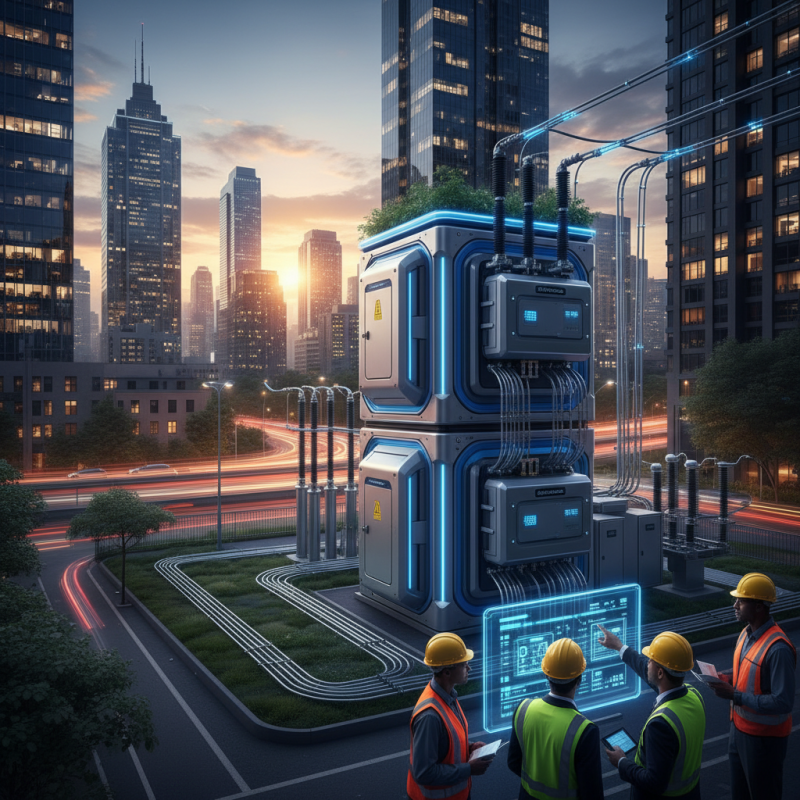
Compact substations play a vital role in modern energy solutions. They are designed to transform and distribute electrical power efficiently. A typical compact substation includes key components such as transformers, switchgear, and control systems. Each component contributes to optimizing the performance and reliability of the electrical grid.
The transformers in compact substations convert high voltage power to a lower voltage suitable for distribution. According to a report by the Energy Resources Institute, transformers can achieve up to 99% efficiency. The switchgear ensures the safe operation of electrical circuits. They are categorized into different types, with gas-insulated switchgear (GIS) becoming popular due to its space-saving qualities.
Control systems monitor the substation's operation. They provide real-time data on performance. However, the complexity of these systems can lead to vulnerabilities. Regular maintenance and software updates are essential to mitigate risks. Data from the International Energy Agency indicates that effective maintenance can reduce operational failures by up to 30%. Compact substations not only enhance energy efficiency but also demand careful consideration of their components and systems for optimal operation.
Compact substations are gaining popularity in modern energy solutions. Their efficiency and versatility make them an attractive option for many applications. Unlike traditional substations, compact variants require less space and can be installed in urban areas where land is limited.
One significant advantage of compact substations is their reduced environmental impact. Smaller designs minimize land disruption and promote better aesthetics. This aspect is crucial as more cities seek sustainable energy solutions.
However, it’s essential to consider that compact substations might not support large-scale energy demands as effectively as their traditional counterparts.
Moreover, compact substations tend to be more resilient. They often utilize advanced technologies for monitoring and control. This can lead to enhanced operational reliability and quicker response to disturbances. Yet, reliance on technology also poses risks, such as the potential for cybersecurity threats. Balancing innovation with robust safety measures is vital for ensuring long-term reliability in energy distribution.
Compact substations play a crucial role in enhancing energy efficiency within urban environments. They occupy less space while offering essential functions like voltage transformation and distribution. Their design allows for closer placement to end-users, reducing energy loss during transmission. This spatial efficiency contributes significantly to minimizing the overall footprint of energy infrastructure.
When considering a compact substation, think about the installation location. The proximity to power users can lead to reduced line losses and better reliability. Additionally, compact substations are often equipped with advanced monitoring technology. This ensures real-time data collection and allows for proactive maintenance. Both factors can enhance the overall efficiency of energy systems.
Tips for improving energy efficiency include regular maintenance checks and adopting smart grid technologies. These steps help track energy usage patterns and optimize performance. Be aware that while compact substations offer many advantages, they also require careful planning and execution. Drawing from experience, it’s important to address potential limitations, such as local regulatory constraints. Balancing innovation with practicality is essential for effective energy solutions.
Compact substations play a crucial role in modern energy solutions. They are designed to optimize space and enhance efficiency in power distribution. These substations can be deployed in various applications, from urban areas to industrial sites. Their compact design allows for easy integration into populated regions where space is limited.
In urban settings, compact substations provide a reliable energy source without requiring extensive land areas. They can support renewable energy sources, like solar or wind, by effectively managing their integration into the grid. This capability is vital for cities aiming for greener energy solutions. For industrial applications, these substations improve operational efficiency by ensuring a constant power supply, crucial for continuous manufacturing processes.
Tips: When considering a compact substation, assess local infrastructure. Make sure it aligns with energy needs. Always consult with experts for proper installation and maintenance. This ensures longevity and reliability. Careful planning and expert advice can also help address potential drawbacks in design or capacity.
Another critical aspect to consider is the impact on local communities. While compact substations are less intrusive than traditional ones, they can still raise concerns. Engaging with local stakeholders early on can pave the way for smoother implementations. Being open to feedback can lead to better solutions that meet community needs while achieving energy efficiency goals.
Compact substations are transforming the landscape of energy solutions. Their compact design allows for efficient use of space, especially in urban settings. As cities grow, the demand for energy increases. Compact substations can be integrated seamlessly into these environments. They provide reliable power without occupying significant land.
Future trends indicate a shift towards smart technology in compact substation design. Incorporating IoT devices and advanced monitoring systems will enhance efficiency. Real-time data will allow for better energy management. This approach can reduce operational costs. However, these systems require careful planning and skilled personnel. Maintenance might become more complex with advanced technology.
Sustainability is another crucial trend. Compact substations can incorporate eco-friendly materials and design principles. This adds to their appeal in modern energy solutions. Yet, balancing sustainability with functionality can be challenging. The industry's focus must be on user needs while adapting to new technologies. Continuous improvement and adaptability will define the future of compact substations.