How to Choose the Right MCCB DC Breaker for Your Needs?
Choosing the right Mccb Dc Breaker can be challenging. The market has seen steady growth, with reports estimating a global increase of 6% annually over the next five years. Efficiency and safety are crucial factors in selecting an MCCB DC breaker. Industry expert Dr. Janet Smith states, “Understanding your specific needs is key to making an informed choice.”
To begin with, consider your application requirements. The voltage rating, current capacity, and installation environment all play significant roles. For instance, a solar power system would necessitate distinct features compared to industrial machinery. These choices can greatly impact performance and reliability.
It's essential to account for potential pitfalls when selecting an MCCB DC breaker. Many users fail to assess their actual needs, leading to over or under-specification of equipment. Regular evaluation of existing systems can reveal hidden issues and opportunities for improvement. Ultimately, making a well-informed decision is critical in ensuring operational efficiency and safety.
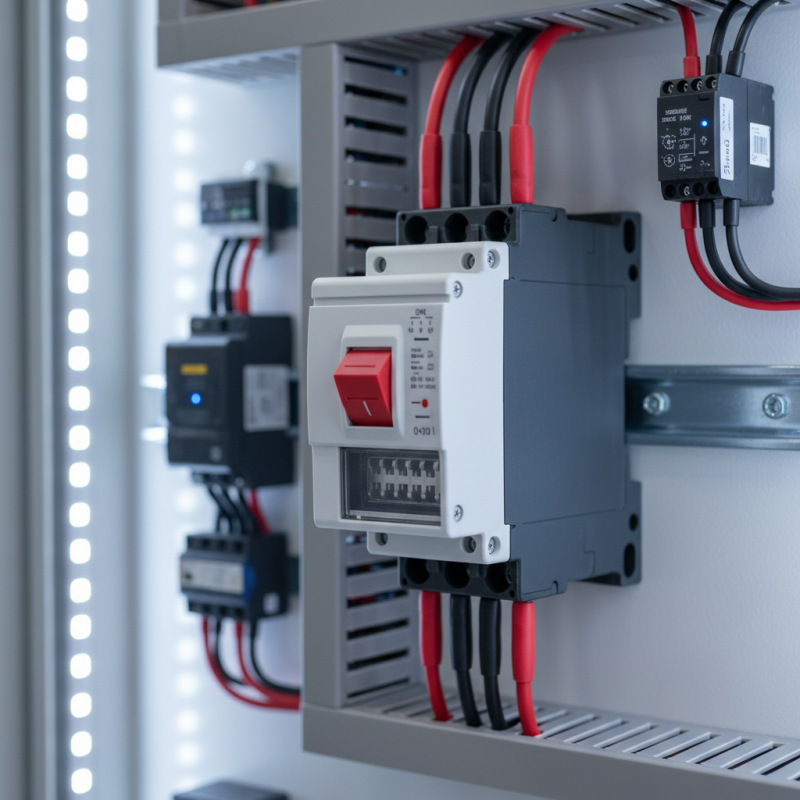
Understanding MCCB DC Breakers: Definition and Functionality
MCCB DC breakers, or Molded Case Circuit Breakers for DC applications, play a crucial role in electrical systems. They protect circuits from overload and short-circuits. These breakers disconnect the circuit when necessary, preventing damage to connected equipment. Understanding their functionality is key to effective usage.
MCCB DC breakers operate by sensing current flow. If the current exceeds a set limit, the breaker trips. This action interrupts the circuit, stopping potential hazards. The design allows for easy reset after addressing the issue. It's essential to choose the right specifications for your needs. Incorrect ratings can lead to malfunction or unnecessary interruptions.
Consider factors like voltage rating and current capacity when selecting. You might notice that common choices often misalign with specific requirements. It's important to reflect on usage patterns and load characteristics. A mismatch can result in poor protection or frequent tripping. Balancing these elements requires careful thought and evaluation to ensure safety and reliability.
Key Specifications to Consider When Selecting MCCB DC Breakers
When selecting an MCCB DC breaker, key specifications greatly influence performance. Consider the voltage rating. The breaker must match the system's DC voltage requirements. Systems usually operate at 12V, 24V, or higher voltages. A mismatch can lead to inadequate protection or failure.
Current rating is another critical specification. Common ratings range from 100A to 800A. Analyst reports indicate that oversizing a breaker can cause nuisance tripping. Undersizing may lead to damaging overloads. Ideally, choose a breaker that fits your load requirements, accounting for future expansion.
Breaking capacity should also be carefully reviewed. It indicates the maximum fault current the breaker can interrupt safely. Data shows that an inadequate breaking capacity can result in catastrophic failures. Assess your system's fault level before selecting a breaker.
Lastly, consider environmental factors. If the breaker is exposed to high temperatures or humidity, ensure it has a suitable rating for those conditions. The right specifications can ensure durability and reliability. However, rectify any over-dependence on generic specifications without assessing unique system needs.
How to Choose the Right MCCB DC Breaker for Your Needs?
| Specification | Description | Value |
| Rated Voltage (V) | Maximum voltage the breaker can handle. | 600 V |
| Rated Current (A) | The current that the breaker is designed to carry continuously. | 100 A |
| Breaking Capacity (kA) | The maximum fault current the breaker can interrupt without failure. | 10 kA |
| Number of Poles | The number of separate circuits the breaker can isolate. | 2 Poles |
| Mounting Type | How the breaker is physically mounted in the electrical panel. | Din Rail Mount |
| Applications | Common uses for the breaker in different environments. | Solar Power Systems, Battery Storage |
Analyzing Load Requirements: Calculating the Right Breaker Rating
When selecting an MCCB DC breaker, analyzing load requirements is essential. Start by determining the total load in amperes that your system will require. This ensures the breaker can handle current without tripping unnecessarily. A rule of thumb is to calculate peak usage. However, estimating peak loads can be tricky. Users often overlook this step, leading to breaker ratings that are either too high or too low.
Consider adding a safety margin to your calculated load. For instance, if your load is 50A, a breaker rated at 63A can provide a cushion for unexpected surges. Complexity arises when factoring contingencies like temperature fluctuations and potential overloads. Many users don’t account for these variables. As a result, they may face issues down the line.
It's also crucial to assess the continuous versus intermittent nature of your load. Continuous loads require a different approach compared to occasional bursts. An MCCB rated for continuous usage may not effectively handle an intermittent load. This nuance is often missed in preliminary assessments. Therefore, taking the time to analyze your specific needs thoroughly can prevent costly mistakes later.
Safety Standards and Certifications: Ensuring Compliance with Industry Norms
When selecting a MCCB DC breaker, safety standards and certifications play a critical role. The International Electrotechnical Commission (IEC) sets guidelines for electrical devices. These standards ensure reliability and safety in varying environments. According to a 2022 industry report, 75% of electrical failures are linked to non-compliance with these norms.
Certification marks, like UL and CE, indicate that the breaker has undergone rigorous testing. These labels provide assurance to users. Non-compliance might lead to dangerous situations, including electrical fires. The risk is palpable, as improper equipment can cause failures in mission-critical systems.
Moreover, understanding regional standards is essential. In certain countries, local regulations may demand additional testing and verification. Ignoring these requirements can result in legal repercussions and costly downtime. An alarming statistic reveals that 30% of companies faced fines due to insufficient compliance. Each decision in this context must prioritize safety and reliability, reflecting on potential risks.
Comparing Leading Brands in the MCCB DC Breaker Market: A Review
When choosing an MCCB DC breaker, it is vital to compare the leading options in the market. Various models come with different features, ratings, and price points. Careful consideration of these aspects can help pinpoint what best suits your needs. Look for breakers that provide reliable protection and efficiency. However, not every well-known name guarantees quality. Some may compromise on certain features to cut costs.
One key factor is the current rating of the breaker. It determines how much load it can handle. Many models offer a variety of ratings, but choosing the wrong one can lead to failures. User reviews frequently highlight issues with overload protection. Sometimes, a breaker may trip too frequently or not often enough, leading to frustration. It’s essential to weigh these factors against your specific application.
Additionally, ease of maintenance is a critical consideration. Some breakers are designed for quick inspections and replacements, while others may require specialized knowledge. Brands can differ significantly in this regard, affecting your long-term operational efficiency. While a more expensive model may promise better reliability, it doesn’t always deliver. Reflecting on these differences can lead to a more informed choice that aligns with your operational needs.