
For over 50 years, we have dedicated ourselves to providing Industry with best in class wire management solutions and to helping solve mission critical issues.

The needs of today’s schools and universities are changing fast. When it comes to anticipating and meeting those needs, MonoSystems is in a class of its own.

For the past five decades, we’ve made it our business to offer more value to our partners, which in turn provides greater value to their customers.
Choosing the right Pvc Steel Wire Hose starts with understanding the job it must perform. A hose moving water through a workshop has different demands from one drawing liquids from a storage tank. The embedded steel spiral helps the hose resist collapse during suction and maintain its shape around bends. It does not make every hose suitable for every pressure, fluid, or temperature. Details matter.
Before comparing products, note the fluid, operating pressure, temperature range, required inner diameter, and expected bend radius. Check the manufacturer’s specifications against those conditions, including any limits for suction or intermittent use. A hose that fits the connector may still restrict flow if its bore is too small. That is easy to miss. Also inspect the wire spacing and wall construction, since reinforcement and flexibility can vary between models.
This guide explains how to weigh those practical factors without treating one specification as the whole answer. Look for clear product data, stated test conditions, and guidance on compatible applications. If those details are missing, ask the supplier rather than guessing. A lower price can be attractive, but replacement costs and downtime deserve attention too. There is no universal “best” choice; the right option depends on the system and how carefully its limits are observed. Even a well-matched hose needs regular inspection for cracks, soft spots, exposed wire, or loose connections. These checks are simple, though they are sometimes postponed. A little caution goes a long way.
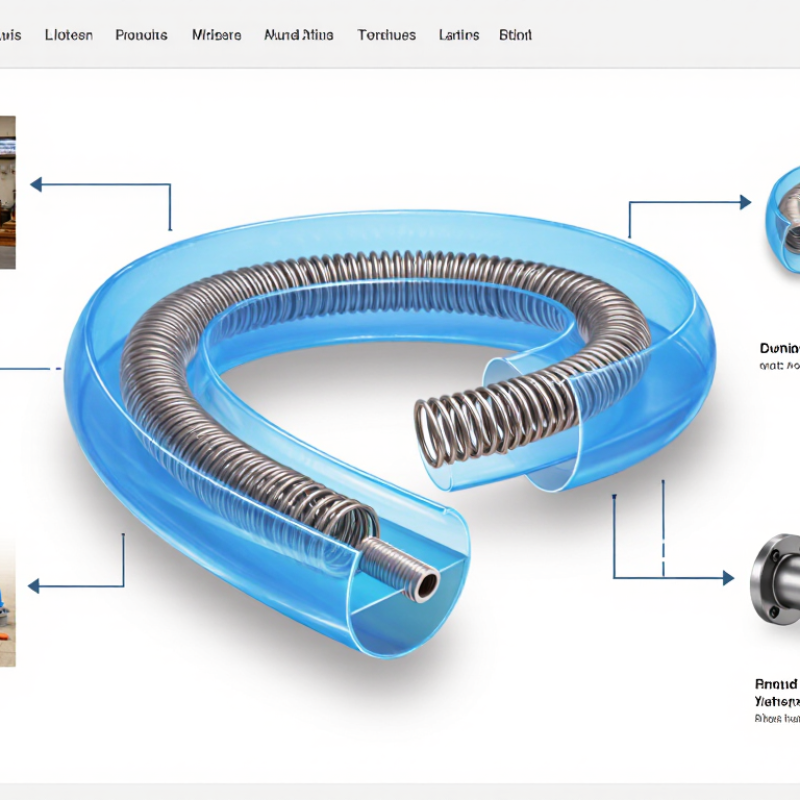
A PVC steel wire hose should be matched to the job, not chosen by appearance alone. Start with the material it will carry: water, oil, slurry, or another fluid. PVC formulations differ, so confirm chemical compatibility with the hose supplier’s technical data. Looks can mislead. A clear wall and visible steel spiral do not prove that a hose suits every liquid or duty.
Next, map the real operating conditions. Record normal and peak pressure, suction or vacuum, fluid temperature, and ambient heat. Include pressure surges, because a pump starting or stopping can stress the hose more than steady flow. Measure the route, too: tight bends, dragging over concrete, and frequent movement can cause wear or kinking. Check the required bend radius and abrasion resistance. A hose that fits on paper may still be awkward beside a machine. Check the details.
Finally, inspect connection size and fitting type, and confirm the hose’s rated working pressure at the expected temperature. Do not rely on burst pressure as a working limit. It is easy to focus on diameter and overlook temperature or vacuum; that shortcut can lead to early failure. If conditions vary, share the full operating range with a qualified supplier before installation, and inspect the hose regularly for cracks, flattening, loose wire, or leaks.
Choosing a PVC steel wire hose starts with the inside diameter, not the outside measurement. Match the bore to the required flow and the ports on your pump or equipment. A narrow hose can restrict flow and make a pump work harder. A much wider hose may be heavier and awkward to route. Small details matter. Check the product’s stated dimensions before ordering.
Length affects more than convenience. Longer runs add friction, which can reduce flow, especially when the hose is narrow or the fluid is moving quickly. Measure the real route, including bends and connection points. Then compare the expected working pressure with the hose rating. Leave a sensible margin, and check whether the rating changes with temperature. A reinforced wire layer helps resist collapse under suction, but it does not make every hose suitable for every pressure. It is easy to focus only on the highest pressure figure; that can be a poor shortcut.
Tips: Write down flow rate, hose length, operating pressure, temperature, and fitting size before comparing options. Ask the supplier to confirm compatibility if any value is uncertain. Measure twice. Real installations are rarely as straight as a diagram suggests.
Compare hose diameter with your required flow, then check pressure ratings and hose length for your application.
How to read this chart: Flow estimates assume a water velocity of 2 m/s and the listed values as actual internal diameters. They are theoretical comparisons, not guaranteed operating capacities. Actual flow depends on the hose’s true inner diameter, length, fittings, fluid, and pressure drop. Check the manufacturer’s working-pressure rating for the selected diameter and temperature, and choose a hose rated above your system’s required pressure.
How to Choose the Best PVC Steel Wire Hose?
Evaluate PVC Quality and Steel Wire Reinforcement
PVC quality affects flexibility, pressure handling, and service life. Inspect the hose under bright light. The wall should look even, without bubbles, cracks, or cloudy patches. A strong chemical smell does not prove poor quality, but it deserves a closer look. Bend a sample gently; it should flex without whitening or keeping a sharp crease. Check the temperature and working-pressure ratings against your actual conditions, not just the highest number on a sales sheet.
Steel wire reinforcement helps the hose resist collapse under suction. Look through a clear wall and check that the spiral is evenly spaced, fully embedded, and continuous near the ends. Uneven gaps can become weak points. If possible, compare wire diameter and spacing across samples, then inspect a cut end for exposed metal or loose PVC. Feel the hose. A heavier wall may seem reassuring, yet excessive stiffness can make routing awkward and strain fittings.
Ask for test data covering pressure, vacuum, and temperature, and confirm that the figures apply to the finished hose. A brief bend test is useful, but it cannot replace documented testing. Watch for vague claims. I would also question my own first impression: a shiny surface can hide inconsistent material, and a neat spiral does not guarantee long-term durability. Small details matter.
Temperature ratings describe the complete hose, not PVC alone. Unplasticized PVC has a glass-transition temperature near 80°C, as reported in the PVC Handbook, but plasticizers and wire reinforcement change hose performance. That figure is not a safe working limit. Check the hose’s stated service range, fluid temperature, pressure rating, and any derating guidance. A warm liquid can soften the wall and reduce pressure capacity. Test the actual setup if conditions fluctuate.
Chemical compatibility depends on the exact fluid, concentration, exposure time, and temperature. ASTM D543-21 provides a test method for assessing how plastics respond to chemical reagents; it does not certify every PVC hose compound. Compare test data for swelling, cracking, softening, or weight change, not just a broad “chemical resistant” label. For outdoor use, sunlight and ozone matter too. ISO 4892-3:2016 describes fluorescent-UV exposure testing for plastics, but laboratory exposure cannot fully predict field life. Inspect hose stored beside a sunny window or near a heater. Small details matter. I would still verify compatibility with the hose supplier when the fluid blend is uncertain; published charts can be incomplete.
A PVC steel wire hose should be selected by its documented working conditions, not appearance alone. Check the stated bore, working pressure, temperature range, and chemical compatibility. ISO 1307:2006 covers hose dimensions and tolerances, so confirm the actual size needed at the connection. A 25 mm nominal bore does not guarantee every hose will fit a 25 mm fitting without checking its tolerances.
Fittings deserve equal scrutiny. Match their material, dimensions, and pressure rating to the hose and the fluid; a loose clamp can leak, while an unsuitable fitting may damage the hose wall. ISO 1402:2021 describes hydrostatic test methods for hoses, and ISO 7751:2016 addresses pressure ratios. Ask for test results tied to the exact hose specification, rather than relying on a general burst-pressure claim. One detail is easy to miss: steel-wire reinforcement supports the hose, but does not make it immune to kinks, abrasion, or crushed wire. Sunlight, repeated bending, and temperature swings can also shorten service life.
Tips: Check the fitting diameter with calipers, inspect wire visibility, and keep the hose’s test certificate. If a supplier cannot provide clear limits, pause before ordering.
| Selection Check | What to Verify | Useful Evidence or Test | Why It Matters |
|---|---|---|---|
| Applicable standards | Confirm which standards and test methods apply to the hose’s material, construction, and intended service. A standard reference alone does not establish that a particular hose is certified or suitable. | ISO 1307 covers dimensions and tolerances for rubber and plastics hoses. ISO 1402 describes hydrostatic testing for rubber and plastics hoses and hose assemblies. ISO 7233 covers resistance to vacuum for rubber and plastics hoses and hose assemblies. | Helps compare test results consistently while avoiding assumptions that a general test standard is a product approval. |
| Pressure rating | Check the stated working pressure at the expected operating temperature, along with burst pressure and any pressure derating instructions. Do not use burst pressure as a working limit. | Request a current technical data sheet and, where needed, a hydrostatic test report identifying the tested hose construction, size, and conditions. | Pressure capacity can vary by hose diameter, temperature, manufacturing construction, and service conditions. |
| Vacuum or suction duty | Confirm that the hose is rated for suction or vacuum service. Check the allowable vacuum at the expected temperature and bend radius. | Ask for vacuum-resistance results, such as testing conducted using an applicable method in ISO 7233, and compare them with the required operating conditions. | A hose suitable for conveying under positive pressure may not resist collapse under vacuum. |
| Dimensions and tolerances | Match the hose inside diameter and outside diameter to the equipment and fitting. Check dimensional tolerances and whether the stated size is nominal or measured. | Use the manufacturer’s dimensional specification and incoming inspection measurements. ISO 1307 provides general hose size and tolerance information. | Poor dimensional fit can cause leakage, difficult assembly, or reduced hose retention. |
| Fitting compatibility | Verify fitting type, insertion depth, barb or stem dimensions, clamp range, and whether the steel-wire helix interferes with insertion or sealing. | Confirm the fitting and clamp are intended for the hose construction. Assemble a sample and inspect insertion, sealing, retention, and clearance from the reinforcement wire. | A fitting that fits the nominal diameter may still be unsuitable for the hose’s wall thickness or wire reinforcement. |
| Temperature range | Check the continuous and intermittent temperature limits for both the conveyed material and the surrounding environment. | Review the product specification for temperature limits and any pressure derating guidance; validate the hose under the actual operating cycle when necessary. | Heat or cold can change PVC flexibility, pressure capability, and resistance to cracking or deformation. |
| Fluid and chemical compatibility | Verify compatibility with the exact fluid, its concentration, temperature, and exposure duration. Consider cleaning agents and occasional contaminants as well as the main fluid. | Obtain a written compatibility assessment for the hose’s wetted materials and test a sample if the fluid or operating conditions are uncertain. | Compatibility depends on the specific formulation and service conditions; “PVC” alone does not establish suitability for every fluid. |
| Flexibility and bend radius | Check the minimum bend radius and route the hose without kinks, twisting, flattening, or sharp bends near fittings. | Compare the planned installation radius with the specified minimum bend radius and inspect the hose under its expected operating conditions. | Excessive bending can restrict flow and put stress on the hose wall and wire reinforcement. |
| Reinforcement and construction | Inspect for continuous, evenly embedded steel wire, uniform wall thickness, smooth inner and outer surfaces, and visible defects. | Review construction details and perform visual and dimensional incoming checks. Confirm that the actual construction matches the technical specification. | Construction consistency affects handling, resistance to collapse, and dependable connection to fittings. |
| Long-term durability | Consider abrasion, UV exposure, ozone, weathering, repeated flexing, storage conditions, and contact with oils or chemicals. | Check any stated environmental limitations, storage guidance, and test data relevant to the application. Establish an inspection and replacement schedule based on service conditions. | Service life cannot be inferred from pressure rating alone and varies with exposure, installation, and maintenance. |
| Traceability and quality control | Confirm that the hose can be identified by size, production lot, pressure rating, and applicable product information. | Request lot-specific inspection or test records where required, and retain the hose specification and installation details. | Traceability supports verification, maintenance, and investigation if a hose or assembly fails. |
Important: Standards and test methods should be checked for their current edition and applicability to the exact hose and assembly. Use the hose maker’s documented ratings and the requirements of the intended application; do not assume a single pressure, temperature range, or service life applies to all PVC steel wire hoses.