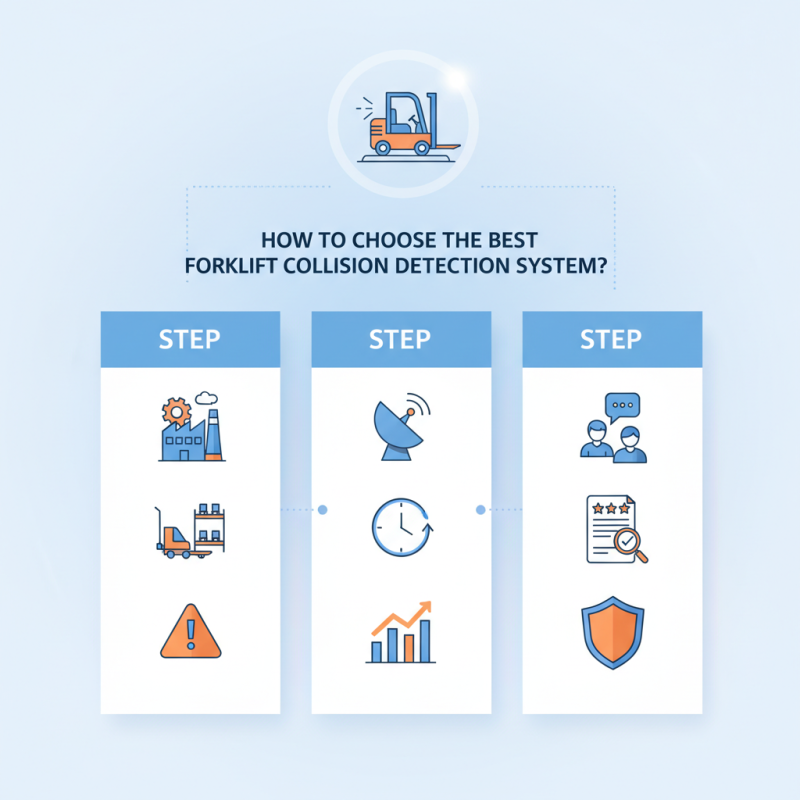
How to Choose the Best Forklift Collision Detection System?
In the busy world of warehouses and manufacturing, safety is paramount. A Forklift Collision Detection System can play a crucial role in preventing accidents. These systems help protect both workers and equipment in environments where forklifts operate frequently. With the variety of options available, it’s essential to choose wisely.
When selecting a fork-lift collision detection system, consider your specific needs. Each workplace is unique, and a one-size-fits-all approach may not work. Evaluate the layout of your facility, the types of equipment in use, and the potential hazards. Ignoring these details can lead to ineffective safety measures.
Moreover, invest in a system that offers reliable technology. Look for systems that provide real-time alerts and has a proven track record. Consult industry experts and research user reviews to ensure you make an informed decision. The right forklift collision detection system can significantly reduce risks and enhance workplace safety.
Understanding Forklift Collision Statistics in Warehouse Operations
Warehouse operations often face challenges related to forklift collisions. According to the National Safety Council, these incidents account for over 100 fatalities and numerous injuries annually in the U.S. Such startling statistics highlight the urgent need for effective collision detection systems. A staggering 70% of these accidents occur in busy environments, predominantly around tight corners and narrow aisles.
To further grasp the issue, a study by the Occupational Safety and Health Administration (OSHA) revealed that improper training and poor visibility contribute significantly to collisions. Operators may rely on their instincts under pressure, but this approach can lead to mistakes. In fact, 25% of accidents involve pedestrian workers, making it clear that enhanced safety measures are not just beneficial but essential.
Focusing on these factors can guide decision-makers in selecting the right collision detection system. It's crucial to evaluate how these systems improve visibility and reduce blind spots. Effective systems also provide real-time alerts, giving operators immediate feedback. However, it's worth questioning if these technologies are fully utilized in warehouse practices. Regular assessments and training can ensure that safety measures are adapted to the specific environment and evolving challenges faced by warehouse operations.
Key Features of Collision Detection Systems for Forklifts
When selecting a forklift collision detection system, certain key features are essential. One vital aspect is the technology used. Systems should employ effective sensors, such as LIDAR or radar, for accurate detection of obstacles. These technologies help minimize false alarms and ensure timely warnings. Additionally, responsiveness is crucial. The system must react swiftly to potential collisions to protect both operators and pedestrians.
Another important feature is user-friendly integration. A collision detection system should be easy to install and compatible with existing equipment. Training staff on how to use the system is equally critical. Employees must understand the alerts and responses adequately. Moreover, data monitoring capabilities play a significant role in enhancing safety. Collecting insight on near-miss incidents helps in refining safety protocols.
Reliability cannot be overstated. A system that frequently malfunctions can create a false sense of security. Periodic assessments and updates are necessary to maintain functionality. While advanced systems may offer numerous features, simplicity should also be considered. Overly complex systems may confuse operators. In choosing the right collision detection system, striking a balance between advanced technology and ease of use is essential for optimal safety.
Comparative Analysis of Collision Detection Technologies
When selecting a forklift collision detection system, understanding the available technologies is crucial. Various types of systems provide different approaches to enhancing safety. Laser-based systems use precise beams to detect nearby objects and alert operators. They are highly accurate but can be expensive and complex to install. Ultrasonic systems, on the other hand, use sound waves to identify obstacles. They are typically more affordable but may struggle with accuracy in noisy environments.
Camera-based systems offer a more comprehensive view of surroundings. They provide real-time video feeds to operators but require proper maintenance to function effectively. Each technology has its strengths and weaknesses. Complex installations can lead to operational delays, while budget constraints affect decision-making.
The effectiveness of these systems often depends on the specific work environment. Variable factors, such as layout, lighting, and noise levels, play significant roles in performance. Continuous evaluation and adaptation of the chosen technology need to be part of any safety strategy. Selecting a system is not as straightforward as it seems. Misalignment with operational realities can lead to inadequate safety measures, underscoring the need for diligent analysis.
Cost-Benefit Analysis of Implementing Collision Detection Systems
When considering the implementation of a forklift collision detection system, businesses must conduct a thorough cost-benefit analysis. Studies indicate that nearly 96,000 forklift-related accidents occur annually in the United States. These incidents lead to significant financial losses, with an estimated cost of $135,000 per injury when accounting for medical expenses, litigation, and lost productivity. Therefore, investing in a collision detection system can dramatically reduce these risks.
While purchasing a collision detection system involves initial costs, the long-term savings can be substantial. For example, facilities that utilize such systems report a decrease in accidents by up to 90%. Reducing accidents not only lowers costs related to injuries but also contributes to a safer work environment, which can enhance employee morale and retention. Approximately 25% of workplace injuries are related to material handling equipment, reinforcing the need for effective safety measures.
However, businesses must weigh the costs against potential savings carefully. Not all collision detection systems offer the same reliability or effectiveness. Companies should consider factors such as system maintenance, training for staff, and integration with existing operations. While the systems can provide significant advantages, they will ultimately require a commitment of time and resources. Assessing the specific needs of your workforce is crucial to choosing the most effective solution.
Regulatory Compliance and Safety Standards in Forklift Operations
In the realm of forklift operations, regulatory compliance ensures safety and efficiency. According to OSHA, forklift accidents cause over 85 fatalities and 34,000 serious injuries annually in the U.S. These statistics highlight the importance of collision detection systems which can mitigate risks and promote safer environments. Companies must stay updated on local regulations, ensuring their systems meet or exceed these requirements.
Consider integrating sensors that detect vehicle movement and proximity to pedestrian areas. Such features can significantly reduce the likelihood of accidents. Additionally, training employees on these systems is crucial. A survey by the National Safety Council found that organizations with regular safety training sessions experience 50% fewer workplace injuries.
Tips:
Regular audits of your safety protocols heighten compliance and reveal potential gaps. Implementing real-time monitoring can provide immediate feedback and enhance overall safety culture. Always assess the effectiveness of your systems and be open to improvements based on incident feedback.