
For over 50 years, we have dedicated ourselves to providing Industry with best in class wire management solutions and to helping solve mission critical issues.

The needs of today’s schools and universities are changing fast. When it comes to anticipating and meeting those needs, MonoSystems is in a class of its own.
For the past five decades, we’ve made it our business to offer more value to our partners, which in turn provides greater value to their customers.
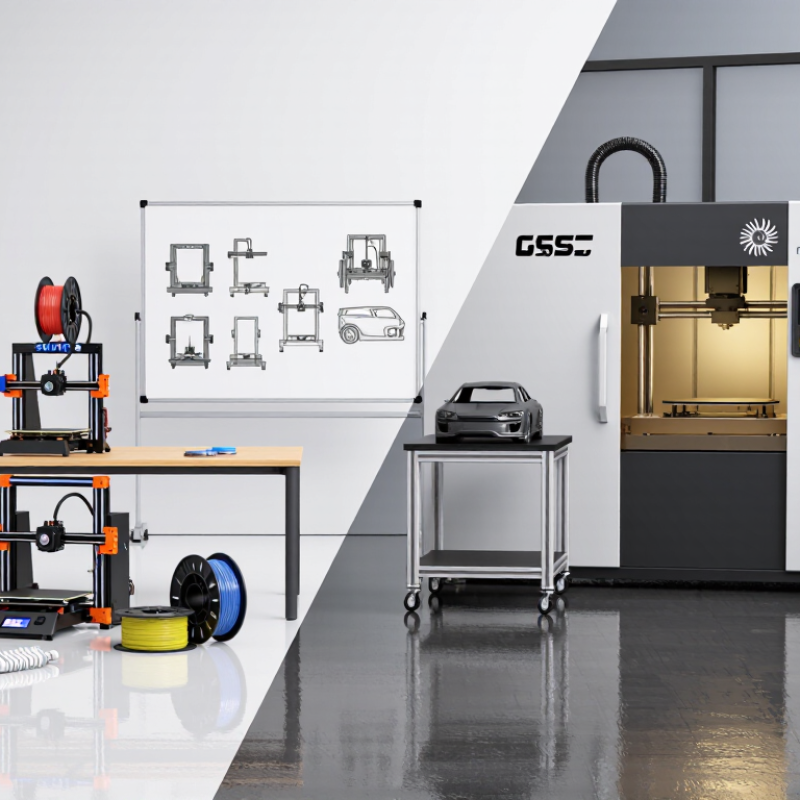
Choosing the best 3d Printing Machine requires more than comparing prices, resolution, or glossy product photographs. The right choice depends on the parts you intend to produce, the materials you need, and the reliability your workflow demands. A desktop FDM machine may suit prototypes, fixtures, and educational projects. A professional SLS, SLA, or metal powder-bed system may be better for functional parts, complex geometries, or repeatable production.
The market is expanding, but growth does not make every machine a sensible investment. The Wohlers Report 2024 estimated that the global additive manufacturing industry reached approximately $20.0 billion in 2023, including systems, materials, software, and services. This figure shows strong adoption across aerospace, healthcare, automotive, and manufacturing. It does not prove that an expensive printer is automatically better. Specs can mislead. Real performance appears in calibration time, first-layer consistency, dimensional accuracy, material availability, and service response.
A practical evaluation should begin with the complete production environment. Check the build volume against your largest intended part, not your most ambitious idea. Examine layer resolution, print speed, chamber temperature, nozzle or laser durability, software compatibility, and safety controls. ISO/ASTM 52900 terminology can help buyers compare additive manufacturing processes more clearly. Total cost also includes consumables, failed prints, preventive maintenance, ventilation, training, and post-processing equipment. Maintenance matters.
This guide explains how to match machine capabilities with real production requirements. It also questions a common assumption: the newest machine is not always the best machine. A reliable system with skilled operators may outperform a faster model that remains poorly calibrated. That distinction can protect both budgets and project timelines.
How to Choose the Best 3D Printing Machine?
Understanding the main types of 3D printing machines makes selection more practical. Material extrusion machines melt plastic filament through a heated nozzle. They suit prototypes, brackets, classroom projects, and large functional parts. Common materials include PLA, PETG, and stronger engineering plastics. Layer lines remain visible, and warping can occur without careful temperature control. A stable frame, heated bed, and automatic calibration improve daily reliability.
Resin machines use liquid photopolymer cured by light. They produce sharp text, smooth curves, and fine miniature details. This makes them useful for dental models, jewelry patterns, and small display parts. However, resin requires ventilation, protective gloves, washing, and controlled curing. The finished parts can also become brittle. Many new users focus on resolution and overlook cleanup time.
Powder-based machines fuse fine material with heat or another energy source. They can create complex shapes and strong parts without traditional support structures. Their equipment, material handling, and post-processing demands are usually higher. Industrial users should examine chamber control, powder recovery, maintenance records, and operator training. A cheaper machine may create higher costs later. It is easy to assume the most detailed printer is the best choice, but that judgment can fail when production speed, safety, and material storage matter more. Test the actual material, part size, and surface requirements before purchasing. Sometimes a slower machine is the wiser tool.
Choosing the best 3D printing machine starts with your printing goal, not its maximum specification. A designer producing small concept models may value fine layer control and clean surface detail. A workshop making functional parts may need a heated chamber, stable temperature control, and strong engineering materials. For large prototypes, build volume matters more than extreme resolution. Bigger is not always better.
The 2024 Wohlers Report valued the global additive manufacturing industry at 20.035 billion dollars in 2023, following 13.5% growth. This expansion reflects wider use in prototyping, tooling, healthcare, and production. Match that diversity carefully. A resin system can capture tiny lettering and smooth curves, while a filament system may offer simpler handling and lower material costs. Powder-based equipment can support complex geometries, but it usually demands stricter process control and post-processing. The machine should fit your workflow.
Check the details behind the headline features. Compare repeatability, material availability, maintenance time, software controls, and operating costs. ASTM International’s additive manufacturing roadmaps stress process qualification and consistent testing. A beautiful first print proves little. Print a calibration part, a thin wall, and a real project component before buying. My own preference would be to test the weakest likely feature first. That approach can expose problems early, although it may slow the decision. Some specifications are difficult to compare fairly. Ask for measured results, not only marketing claims.
| Printing Technology | Best Printing Goals | Typical Materials | Typical Layer Height | Typical Build Volume | Main Advantages | Main Limitations | Recommended User Profile |
|---|---|---|---|---|---|---|---|
| FDM / FFF | Low-cost functional prototypes, fixtures, educational models, replacement parts, and large-format concepts | PLA, PETG, ABS, ASA, TPU, nylon, polycarbonate, and fiber-reinforced filaments | About 0.05–0.40 mm | Approximately 180 × 180 × 180 mm to more than 300 × 300 × 300 mm | Lowest entry cost, broad material selection, simple material storage, and relatively easy maintenance | Visible layer lines, anisotropic strength, warping with some materials, and more support cleanup for complex shapes | Beginners, schools, hobbyists, makers, and engineering teams needing economical prototypes |
| SLA / MSLA / DLP | Highly detailed miniatures, dental and jewelry patterns, visual prototypes, and smooth-surface models | Photopolymer resins, including standard, tough, flexible, castable, dental, and high-temperature formulations | About 0.025–0.10 mm | Approximately 130 × 80 × 160 mm to about 300 × 200 × 300 mm | Excellent fine detail, smooth surfaces, and consistent dimensional reproduction for small parts | Liquid resin handling, washing and UV post-curing, consumable replacement, and limited outdoor durability for some resins | Designers, model makers, dental laboratories, jewelers, and users prioritizing detail over part size |
| SLS | Durable functional prototypes, complex assemblies, internal channels, lattice structures, and small-batch production | Nylon powders, glass-filled nylon, aluminum-filled polyamide, and selected elastomeric powders | About 0.06–0.15 mm | Typically around 165 × 165 × 185 mm to approximately 380 × 380 × 300 mm | No dedicated support structures, strong and complex parts, and efficient batch nesting | Higher equipment and material cost, powder handling, surface grain, and the need for depowdering equipment | Professional product developers, service bureaus, and manufacturers producing functional nylon parts |
| MJF | Fast production of multiple functional polymer parts, enclosure components, and customized product batches | Primarily nylon-based powders, including standard and reinforced polyamide formulations | About 0.08–0.12 mm | Often around 380 × 284 × 380 mm, depending on the system | High throughput, good mechanical performance, efficient batch production, and strong nesting capability | High capital cost, powder management requirements, and a more specialized workflow than desktop systems | Manufacturers, service providers, and engineering teams focused on production-grade polymer parts |
| Material Jetting | Full-color appearance models, multi-material prototypes, design validation, and realistic product presentations | Photopolymer materials, including rigid, flexible, transparent, and color-capable resins | About 0.016–0.032 mm | Commonly around 490 × 390 × 200 mm to approximately 1,000 × 800 × 500 mm | Very high visual quality, smooth surfaces, color capability, and multiple material properties in one model | High operating cost, resin aging, support-material waste, and limited long-term durability for some applications | Professional design studios, consumer-product teams, and organizations requiring presentation-ready models |
| Selective Laser Melting / Laser Powder Bed Fusion | Metal prototypes, lightweight aerospace structures, medical components, tooling, and low-volume metal production | Stainless steel, aluminum, titanium, cobalt-chrome, tool steel, and nickel-based alloys | About 0.020–0.060 mm | Typically around 100 × 100 × 100 mm to approximately 400 × 400 × 400 mm | Produces dense metal parts with complex geometries, internal channels, and high-performance material properties | Very high equipment cost, inert-gas requirements, powder safety controls, support removal, and heat treatment | Industrial manufacturers, aerospace and medical engineering teams, and specialized metal-production facilities |
Note: Specifications are representative industry ranges. Actual performance depends on machine configuration, material formulation, model geometry, slicing parameters, and post-processing requirements.
Material choice should match the part’s daily reality. Nylon powder suits functional hinges and clips because it tolerates repeated movement. Resin captures tiny lettering and smooth curves, but many resins remain brittle. Metal powder handles heat and load, although it demands careful calibration and post-processing. According to the Wohlers Report 2024, the global additive manufacturing industry reached $20.035 billion in 2023, showing how widely these material choices are entering production.
Print quality needs measurable proof, not attractive sample models. Check dimensional accuracy with calipers or a coordinate measuring machine. Test tensile coupons from the same build plate. Look for edge swelling, visible layers, trapped powder, and warped corners. ISO/ASTM 52902 provides guidance for evaluating additive manufacturing system capabilities, but shop conditions still influence results. A clean test in a showroom may not represent a humid workshop.
Speed claims can mislead. A machine may print quickly, then lose hours during cooling, support removal, curing, or powder recycling. Compare complete cycle time, not only layer speed. Wohlers Report 2024 recorded 13.5% industry growth, increasing pressure for faster production. Still, faster is not always better. A slightly slower system may reduce failed parts and inspection work. I still question any brochure that hides setup time. Test the same geometry, material, layer height, and batch size before choosing.
Evaluating workspace, software, and ease of operation matters more than impressive specifications. Measure your available table space, including room for cables, ventilation, and routine maintenance. A large build volume sounds useful, but it may waste space if you usually print small components. Leave clearance around the machine. You will need access when removing a finished model or checking a blocked nozzle.
Software should fit your actual workflow. Look for clear model preparation tools, adjustable layer settings, reliable file previews, and simple error notifications. A practical interface reduces mistakes during repeated projects. Test the slicer with a sample model before purchasing. I once chose advanced settings too quickly and created unnecessary failed prints. That experience taught me to value clear defaults over endless controls. Compatibility with common file formats also improves reliability between design and printing programs.
Tips: Place the machine near stable power and good airflow. Keep tools within reach. Choose software that offers beginner presets and manual control. Check whether replacement parts and technical guidance are easy to obtain. Ease of operation includes setup, calibration, cleaning, and recovery after a failed print. A machine that prints beautifully but demands constant adjustment may become frustrating. Still, no device is completely effortless. Even dependable equipment needs inspection, patience, and occasional recalibration.
How to Choose the Best 3D Printing Machine?
The purchase price is only the opening figure. Calculate total cost over three to five years before choosing a 3D printing machine. Include electricity, materials, replacement parts, software, training, and technician time. A machine that costs less may consume more filament or require frequent calibration. Small expenses accumulate quietly.
Maintenance deserves practical attention. Ask how often the build platform needs adjustment, filters need replacement, and moving parts need lubrication. Check whether technicians can access common components without dismantling the entire machine. Keep a maintenance log with dates, faults, repair hours, and material waste. This record supports reliable cost estimates.
Downtime has a financial cost. If a failed overnight print wastes 400 grams of material, record its value and production delay. Estimate the hourly value of the machine and operator, not only the replacement parts. Compare warranty coverage, service response, spare-part availability, and expected operating life. These details often matter more than maximum print speed.
I have underestimated labor before.
Long-term value also depends on your workload. A slower machine may be economical for occasional prototypes, while a durable system can justify higher ownership costs in continuous production. Review real output, not optimistic specifications. Leave room for uncertainty, because maintenance needs vary with dust, temperature, print volume, and operator skill. Recalculate the estimate after several months of actual use.
Five-year total cost of ownership (TCO) is often more useful than the initial purchase price. The chart compares typical machine categories using estimated acquisition, materials, maintenance, and energy costs in USD.
Estimates assume regular professional use over five years. Actual costs vary with print volume, material type, labor, service contracts, and electricity prices.