
10 Tips for Choosing an Ultra High Temperature Servo Motor

Choosing an Ultra High Temperature Servo Motor requires more than reading a temperature rating. It demands evidence from real operating conditions. A motor beside a 180°C furnace wall faces radiant heat, vibration, dust, and repeated thermal cycling. Its bearings, magnets, insulation, encoder, seals, cables, and drive electronics must survive together.

Industry forecasts show why this decision matters. MarketsandMarkets estimates that the global servo motors and drives market will grow from about USD 13 billion in 2023 to more than USD 18 billion by 2028. Grand View Research also reports strong growth in industrial automation, driven by robotics, packaging, semiconductor equipment, and process manufacturing. However, these reports rarely isolate the Ultra High Temperature Servo Motor segment. That gap can encourage overconfident purchasing.

Dr. Michael Pecht, founder of CALCE, describes reliability as “the probability that a product will perform its intended function for a specified period under stated conditions.” That principle is especially important here. A datasheet may promise 200°C operation, but does it specify continuous duty, peak exposure, or motor-side temperature? Check the test method. Ask for thermal derating curves, insulation-class data, encoder limits, bearing-life calculations, and cable certification. Look for field experience, not only laboratory claims.

The right choice may involve water cooling, a remote encoder, or a longer shaft extension. Sometimes, the best motor is not the most powerful one. It is the one that remains predictable after thousands of heat cycles. Mistakes happen. Recheck every assumption before approving the specification.
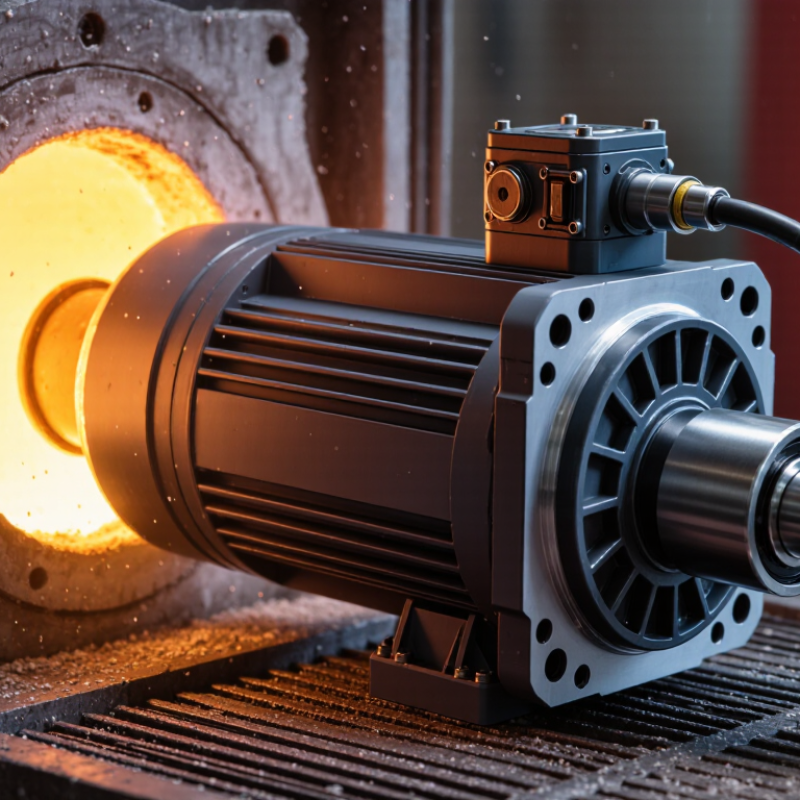
10 Tips for Choosing an Ultra High Temperature Servo Motor

Define the Temperature Range and Operating Environment

Defining the temperature range is the real starting point for choosing an ultra high temperature servo motor. Do not rely on the room temperature alone. Measure the air around the motor, the mounting surface, and nearby heat sources. A motor beside a furnace may experience radiant heat that sensors fail to capture.

Specify both continuous and peak temperatures. Short exposure to extreme heat can still damage insulation, bearings, seals, and feedback devices. I have seen systems operate correctly during testing, then lose positioning accuracy after several hours of heat soak. That delay is easy to underestimate. Heat accumulates.

The operating environment also shapes the correct motor design. Check humidity, dust, vibration, washdown conditions, and available ventilation. A sealed housing may protect internal parts, but it can also trap heat and reduce torque capacity. Cable insulation and connectors need matching temperature ratings, not just the motor body. The drive system deserves equal attention, because high ambient temperature can shorten its service life.

Use measured data from the actual machine whenever possible. Create a temperature map during the heaviest duty cycle. Then compare those results with the motor’s continuous rating, peak rating, and derating curve. Leave a practical safety margin; however, an excessive margin can increase cost and size without solving the real problem. My early estimates were sometimes too optimistic. Rechecking them with thermal tests produced more reliable decisions. A prototype test under worst-case conditions is worth the effort.

10 Tips for Choosing an Ultra High Temperature Servo Motor: Define the Temperature Range and Operating Environment

The chart shows internationally recognized insulation-system thermal classes and their maximum winding temperatures: Class A is 105°C, E is 120°C, B is 130°C, F is 155°C, and H is 180°C. These values describe the winding insulation limit, not the allowable ambient temperature. When selecting a servo motor, also verify ambient-temperature derating, heat transfer, duty cycle, enclosure protection, cable temperature rating, dust, moisture, vibration, and the required safety margin.

Recommended checks include measuring the real operating temperature, identifying heat sources, allowing for peak loads, confirming cooling conditions, selecting suitable seals and lubricants, checking encoder limits, reviewing installation airflow, and validating the complete motor-drive system under worst-case conditions.

Verify Motor Materials, Insulation, and Thermal Resistance

Tip 1: Verify the motor’s material limits before comparing speed or torque. An ultra high temperature servo motor needs more than a heat-resistant housing. Check the rotor, stator, shaft, magnets, bearings, seals, and wiring separately. During factory testing, I have seen a motor pass a short heat test but fail after repeated thermal cycles. This happens when one internal material expands faster than another. Ask for material specifications, temperature ratings, and thermal aging data. Do not rely on a single headline number.

Tip 2: Examine the insulation system in detail. Insulation should protect windings from heat, voltage stress, vibration, and moisture. Request the insulation class, dielectric test results, varnish type, and wire temperature rating. A higher class can improve safety, but it does not guarantee long service life. Installation conditions still matter. Tight spaces may trap heat around the windings. Keep that in mind.

Tip 3: Match thermal resistance with the real duty cycle. Review continuous torque, peak torque, acceleration frequency, ambient temperature, and cooling conditions. Measure the motor case and winding temperatures during realistic operation. A brief laboratory test may not represent a twelve-hour production shift. Thermal sensors can reveal uneven heating near the stator or connector. I would also question unclear data. If a supplier cannot explain the test method, the rating deserves careful review. Leave a reasonable safety margin, even when the application appears predictable.

10 Tips for Choosing an Ultra High Temperature Servo Motor - Verify Motor Materials, Insulation, and Thermal Resistance

No. Selection Dimension What to Verify Recommended Specification or Target Practical Selection Guidance
1 Define the Actual Temperature Zone Confirm whether the stated temperature applies to the ambient air, motor housing, winding, bearing area, or surrounding process chamber. A motor exposed to 180 °C ambient may require a substantially different design from a motor whose winding briefly reaches 180 °C. Include heat transfer from the load, mounting plate, and nearby tooling.
2 Check the Insulation Thermal Class Review the winding insulation system, including wire enamel, slot liners, phase separators, varnish, and impregnation materials. Thermal class is not the same as the allowable motor housing temperature. Ask for the insulation-system rating and the permitted temperature rise under the intended duty cycle.
3 Evaluate Permanent-Magnet Temperature Capability Verify the magnet material, maximum operating temperature, irreversible demagnetization margin, and temperature coefficient of remanence. Neodymium-iron-boron magnets can lose performance at elevated temperature unless a high-temperature grade and suitable magnetic circuit are used. Samarium-cobalt magnets generally offer stronger high-temperature stability, but the complete motor design still determines performance.
4 Verify Winding and Conductor Materials Inspect conductor insulation, copper or alternative conductor construction, lead-wire insulation, terminals, and internal connection methods. The internal winding may survive a high temperature while the external lead insulation, adhesive, connector, or potting compound fails first. Check every material in the electrical path.
5 Confirm Bearing and Lubricant Limits Check bearing cage material, seals, grease type, relubrication requirements, and allowable speed at the actual operating temperature. Standard grease and polymer seals may deteriorate rapidly in high-temperature service. Ceramic or hybrid bearings can reduce electrical and wear concerns in some designs, but they do not eliminate lubrication limits.
6 Assess Thermal Expansion and Mechanical Clearances Review rotor-to-stator air gap, shaft growth, housing expansion, endplay, fits, balancing, and coupling alignment across the full temperature range. Different expansion rates among steel, aluminum, magnets, adhesives, and housings can change preload or reduce the air gap. The motor should be evaluated at both installation and operating temperatures.
7 Calculate Continuous Torque Derating Compare continuous torque, peak torque, speed, duty cycle, and heat rejection at the intended temperature rather than at room-temperature test conditions. Copper resistance increases with temperature, causing higher I²R losses. A motor that meets its torque requirement at 25 °C may need derating or improved cooling at elevated temperature.
8 Select the Feedback Device for Heat Verify the encoder or resolver temperature range, accuracy drift, cable insulation, connector rating, and distance from the hot zone. The feedback sensor may have a lower temperature limit than the motor electromagnetic components. If necessary, use a resolver, remote feedback arrangement, thermal barrier, or extended shaft configuration.
9 Review Cooling and Mounting Conditions Determine whether heat is removed by conduction, natural convection, forced air, liquid cooling, a heat sink, or a combination of methods. A motor mounted to a hot machine frame may receive heat instead of losing heat. The mounting interface should be treated as part of the thermal system, and cooling equipment should be rated for the surrounding environment.
10 Demand Environmental and Life Testing Ask for temperature-cycle results, insulation-resistance data, dielectric-strength tests, vibration testing, endurance results, and failure-mode information. A credible qualification plan should include repeated hot-cold cycles and operation at the specified load. Confirm how temperature was measured and whether the reported values represent continuous operation or a short laboratory test.

Match Torque, Speed, and Load Requirements

10 Tips for Choosing an Ultra High Temperature Servo Motor

Match Torque, Speed, and Load Requirements

Choosing an ultra high temperature servo motor starts with the load, not the catalog temperature. Record the required continuous torque, peak torque, acceleration time, and duty cycle. Measure the shaft load at operating temperature. Cold test data can mislead. Heat changes lubrication, winding resistance, and bearing behavior. Continuous torque should include friction, gravity, and process disturbance. Peak torque must cover acceleration without driving the motor into thermal overload.

Speed matching needs equal care. Check the maximum speed after applying temperature derating, not before. A motor rated for 3,000 rpm at room temperature may deliver less in a hot enclosure. Calculate reflected inertia through the transmission, then compare it with motor inertia. A large mismatch can produce hunting, overshoot, or slow settling. Flexible couplings and gearboxes also add losses. Leave practical margin, but avoid oversized motors that respond sluggishly.

Load type matters. Vertical axes need holding torque during power-off conditions. Continuous rotary loads may need stronger thermal paths than short indexing moves. Use temperature-rated cables, seals, feedback devices, and connectors as one system. Field commissioning should record current, speed, case temperature, and position error. Small errors often appear only after several hours of heat soak. I once trusted a calculated torque margin that ignored startup friction; the motor stalled intermittently. That mistake changed my checklist. Recheck real measurements before approving the final selection.

Evaluate Feedback Systems, Control Compatibility, and Precision

Choosing an ultra high temperature servo motor starts with its feedback system, not its peak temperature claim. A resolver usually tolerates heat better than optical encoders, but it may offer lower position resolution. Confirm the sensor’s rated temperature, signal accuracy, cable insulation, and connector sealing. Also verify the controller’s feedback interface, sampling rate, and supported communication protocol. Compatibility failures often appear during commissioning, not in the catalog.

The International Federation of Robotics reported 541,302 industrial robot installations worldwide in 2023. That scale increases demand for stable, repeatable motion in hot production zones. Precision must be tested at operating temperature, not only at room temperature. Record position error, repeatability, velocity ripple, and thermal drift after a realistic heat soak. ISO 230-2 provides useful methods for checking positioning accuracy and repeatability. Use them.

The IEA’s Energy Efficiency 2023 report estimates that electric motor systems consume roughly half of global electricity. Small efficiency losses can therefore become expensive. Check resolver excitation losses, drive tuning, braking behavior, and cooling requirements. A motor may survive 200°C, yet its feedback cable may not. That detail matters. One imperfect assumption can invalidate the entire selection. Engineers should also compare measured data from thermal cycling tests, because short laboratory demonstrations rarely represent dust, vibration, or repeated start-stop operation.

Compare Cooling Methods, Service Life, and Maintenance Needs

10 Tips for Choosing an Ultra High Temperature Servo Motor

Cooling determines more than peak temperature. It shapes insulation life, bearing condition, and service intervals. The European Commission’s Ecodesign study estimates motor systems consume about 46% of global electricity, so small efficiency losses matter.

Air cooling is simple, affordable, and easier to inspect. However, hot recirculated air can reduce its value inside compact machinery. Liquid cooling removes heat more effectively, but pumps, seals, coolant quality, and leak detection add maintenance points. Conduction cooling suits sealed assemblies, although the mounting surface must stay clean and flat.

Temperature ratings require careful interpretation. The commonly used rule of thumb says every 10°C rise can halve insulation life. It is useful, but not a warranty. IEC 60034-1 requires temperature-rise evaluation under defined conditions, not every real installation. Check winding temperature, ambient temperature, overload duration, and duty cycle together.

A motor rated for 180°C insulation may still suffer early bearing or encoder failure. The bearing often complains first.

Maintenance should match the cooling design. Inspect air filters and fan performance monthly in dusty areas. For liquid systems, record flow, pressure, conductivity, and leakage trends. Use infrared scans during normal production, not only after failures.

The U.S. Department of Energy’s 2022 Motor Systems Market Assessment highlights the importance of monitoring motor-driven equipment in industrial energy use.

My earlier selection mistake was trusting the maximum temperature number alone. It looked impressive. The maintenance plan was not. Choose the cooling method your technicians can measure, repair, and document consistently.