
For over 50 years, we have dedicated ourselves to providing Industry with best in class wire management solutions and to helping solve mission critical issues.

The needs of today’s schools and universities are changing fast. When it comes to anticipating and meeting those needs, MonoSystems is in a class of its own.
For the past five decades, we’ve made it our business to offer more value to our partners, which in turn provides greater value to their customers.
What Is a Paper Roll Slitting Machine?
A Paper Roll Slitting Machine converts a wide parent roll of paper into narrower rolls for packaging, printing, tissue products, and other uses. It typically unwinds the large roll, cuts the web with rotary or razor blades, and rewinds the strips onto separate cores. The exact setup depends on the paper’s thickness, width, coating, and intended application.
The process sounds simple. In practice, cut quality depends on several connected details: blade condition, web tension, roll alignment, and rewinding pressure. If tension is uneven, the finished rolls may telescope, wrinkle, or feel loose at the edges. Small adjustments matter. A clean blade also helps produce more consistent edges and reduces dust, though results vary with the material and machine design.
This guide explains the machine’s main components, how slitting and rewinding work, and which features buyers may compare. These can include working width, speed range, blade arrangement, core sizes, and changeover needs. Specifications alone do not tell the whole story. A machine suited to lightweight tissue may not be appropriate for dense paperboard, so confirm requirements with the manufacturer and test representative material where possible. Even a careful checklist can miss a production-floor constraint. That is worth reflecting on before choosing equipment.
Definition and Purpose of a Paper Roll Slitting Machine
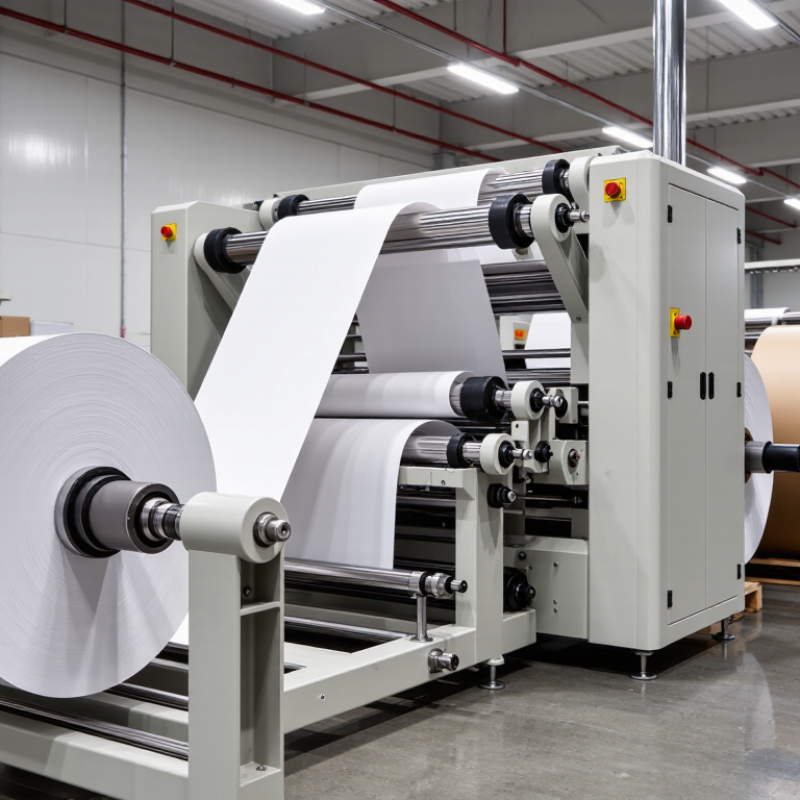
A paper roll slitting machine converts a wide parent roll into narrower rolls for printing, packaging, tissue, and other uses. It unwinds the paper web, cuts it with rotary knives or blades, then rewinds each slit section onto a core. The result is narrower stock sized for a later production line. That is its purpose.
Operators set knife spacing to match the requested widths and manage web tension as the paper moves. They also monitor trim edges, roll alignment, and winding tightness. Poor settings can leave ragged edges, loose rolls, or telescoping layers. Waste adds up. The FAO’s Global Forest Products Facts and Figures 2022 reports global paper and paperboard production of about 401 million tonnes that year, illustrating the scale of material moving through paper supply chains. Slitting helps convert large rolls into formats that downstream equipment can handle.
Not every grade behaves alike. Thin tissue may stretch or wrinkle, while heavier board can demand different cutting pressure and tension. A practical setup may need trial cuts. That takes time. Slitting also cannot correct defects already present in the parent roll, such as uneven winding. Operators therefore check both the incoming roll and the finished edges before releasing a batch.
What Is a Paper Roll Slitting Machine? - Definition and Purpose of a Paper Roll Slitting Machine
| Dimension | Description | Practical Detail |
|---|---|---|
| Definition | A paper roll slitting machine is a converting machine that cuts a wide parent roll of paper into narrower rolls. | The finished rolls are made to specified widths and may also be rewound to a required diameter or roll format. |
| Primary purpose | It prepares paper in widths suitable for downstream manufacturing, packaging, printing, or end use. | Slitting helps match the roll format to the requirements of equipment such as printing presses, paper converting lines, and packaging machines. |
| Feed material | The input is usually a large paper roll, often called a parent roll or jumbo roll. | Paper grades can include printing paper, kraft paper, tissue, and coated or uncoated papers. Machine settings depend on the grade and roll properties. |
| Basic process | The paper web is unwound, guided through the cutting section, divided lengthwise, and rewound into narrower rolls. | Some machines also include edge trimming, web tension control, and automatic roll handling. |
| Cutting methods | Common methods include rotary shear cutting and razor cutting. | The suitable method depends on the paper grade, thickness, required edge quality, production conditions, and machine design. |
| Main components | Typical components include an unwind stand, web-guiding system, slitting section, tension controls, and rewind stations. | Specific configurations vary; some machines use differential winding or automated knife positioning for particular production needs. |
| Key operating variables | Important variables include web tension, cutting-tool condition and alignment, line speed, and rewind pressure. | Incorrect settings can contribute to issues such as uneven edges, wrinkles, telescoping rolls, or loose winding. |
| Finished product | The output consists of one or more narrower rolls, commonly called slit rolls or finished rolls. | Roll width, diameter, winding tightness, and core specifications are selected according to the next process or customer requirements. |
| Quality checks | Operators commonly check roll width, edge condition, winding consistency, and roll appearance. | Additional checks may include roll diameter, roll weight, splice condition, and whether the finished roll meets the specified tolerance. |
| Typical applications | Slit paper rolls supply printing, packaging, tissue converting, and other paper-processing operations. | The machine does not manufacture paper; it converts an existing wide roll into narrower rolls for subsequent use. |