
For over 50 years, we have dedicated ourselves to providing Industry with best in class wire management solutions and to helping solve mission critical issues.

The needs of today’s schools and universities are changing fast. When it comes to anticipating and meeting those needs, MonoSystems is in a class of its own.

For the past five decades, we’ve made it our business to offer more value to our partners, which in turn provides greater value to their customers.
Choosing a vacuum coating machine is not just a matter of comparing chamber sizes or headline prices. The right system must suit your materials, product dimensions, coating method, and expected production volume. A machine that looks impressive in a brochure may still struggle with uniformity across a large substrate. Details matter.
Dr. Donald M. Mattox, a respected author on physical vapor deposition, has written extensively about the processes behind thin-film coatings. A fair paraphrase of a key principle in his work is: “Choose equipment for repeatable process control, not impressive specifications alone.” Treat that as guidance, not a substitute for checking the supplier’s claims. Ask for coating samples, thickness-uniformity data, pump-down times, and references from users with similar applications. If possible, watch a demonstration using your own substrate and coating material.
These seven tips will help you assess deposition technology, chamber capacity, control systems, maintenance needs, technical support, and total ownership cost. Look closely at the vacuum pumps and the controls; they shape daily operation. Ask how quickly the supplier can provide spare parts and operator training. A low purchase price can hide expensive downtime. No checklist removes every risk, and some trade-offs may only become clear after installation. That is worth admitting. Verify the details before signing, and make sure the machine can meet your process requirements—not merely your purchasing budget.
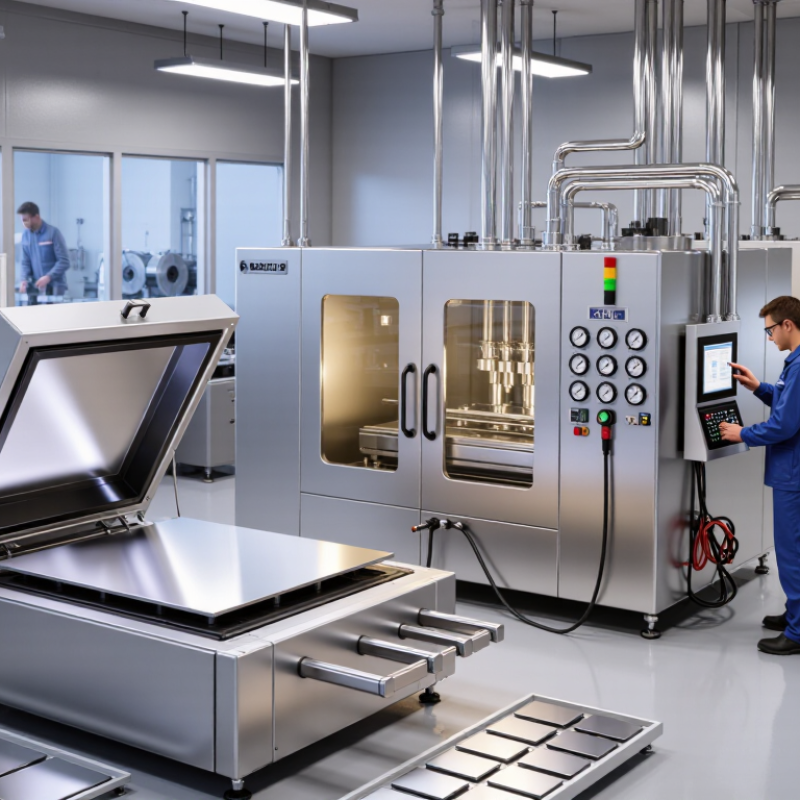
A machine should match the coating job, not just its advertised capacity. Start by naming the required film: metal, oxide, or another functional layer. Then identify how it will be deposited. Evaporation, sputtering, and plasma-assisted processes differ in target materials, energy input, and process control. They are not interchangeable. Ask what film thickness, uniformity, and adhesion your part actually needs; “good finish” is too vague to guide a purchase.
Map substrate materials and shapes next. Glass, polymer, and metal respond differently to heat, plasma, and surface preparation. A thin plastic housing may warp under conditions tolerated by a metal fixture. Check the largest part, the smallest feature, and how many pieces fit around the chamber. Small parts vary. A flat coupon can look excellent while a recessed corner remains thin. Test representative parts, not only polished samples.
Bring suppliers a written process brief and ask for trial data using your substrate. Include cleaning steps, allowable temperature, target thickness, and acceptable variation. Request details on pumping time, fixtures, monitoring, and repeatability, not just chamber size. A larger chamber is not automatically more productive. Cycle time and loading effort can matter more. I would also leave room for uncertainty: early estimates often miss preparation time. Confirm the process window before comparing prices, because the cheapest machine may not meet the actual coating requirement.
A vacuum coating chamber should fit the parts you actually plan to run, not just the largest item on a drawing. Measure each part’s length, width, and height, then include its holder, clamps, and any rotation hardware. A 40-centimeter panel may need much more space once mounted upright. Leave clearance between parts and chamber walls so vapor can reach surfaces evenly. Allow room to breathe. Crowding can create uneven coverage, while an oversized chamber may take longer to pump down and consume more energy per batch.
Batch throughput changes the calculation. Estimate how many parts fit without blocking one another, and consider how often operators can load, unload, and prepare fixtures. For example, a chamber that holds twelve small brackets may be less useful if loading them takes longer than the coating cycle. Check whether fixtures can be exchanged quickly and whether different part shapes need dedicated setups. That matters. Ask suppliers to review a sample loading layout, not only the chamber’s listed dimensions. Include space for future part variations, but avoid paying for capacity you rarely use. These estimates are imperfect; real fixtures and handling time often reveal gaps in an initial plan.
Compare the chamber’s internal volume with a sample batch envelope. This illustration assumes 10 fixture positions, each with a 24 L bounding envelope, and uses 60% of chamber volume as a planning allowance—not a universal loading rule.
The example batch envelope is 240 L (10 × 24 L). The chamber volumes are calculated from the listed internal dimensions. Volume alone does not confirm that parts and fixtures will fit: check their overall dimensions, spacing, loading access, and required batch throughput.
When comparing vacuum coating machines, separate base pressure from working pressure. Base pressure is measured before process gas enters the chamber; working pressure is maintained during deposition. Many sputtering systems operate around 0.1–1 Pa, but the ideal range depends on the process, target, and coating material.
Ask what pressure the machine can reach, how quickly it gets there, and where the gauge is installed. A gauge near the pump may not show conditions at the substrate. Check whether the system uses suitable pressure measurement across both high-vacuum and process ranges. Numbers can mislead.
Gas control matters just as much. Look for stable flow regulation, clear flow-meter ranges, and a way to adjust gas pressure repeatably. Small changes can affect plasma stability and film uniformity. Ask for operating data using a chamber load similar to yours, not just an empty-chamber specification. A shiny sample proves little.
I would also check how the machine handles leaks and routine maintenance. Seals, valves, and gas lines need inspection; even a capable pump cannot compensate for a persistent leak. Specifications rarely tell the whole story, and I have seen purchasing decisions lean too heavily on one impressive pressure figure. Compare the full process window with your actual coating requirements.
When comparing a vacuum coating machine, ask suppliers to coat your actual parts or representative test panels. A polished coupon may behave differently from a textured component. Check adhesion after the coating has cooled and been conditioned. Then assess it using ASTM D3359, a tape-test method for evaluating coating adhesion.
The scale runs from 0B to 5B. A 5B result means no coating was removed; 0B means more than 65% of the tested area came away. The middle ratings reflect increasing coating loss. Method choice, cutting quality, tape, and test conditions can affect results. Small details matter.
Ask for the test method, rating, substrate, and coating thickness with each sample. Compare results across repeated runs, not just one attractive panel. A high rating is useful, but it does not measure every kind of bond strength or predict long-term wear by itself. For plastic parts, agree on a suitable test procedure, since ASTM D3359 was developed for coatings on metallic substrates. A scratched edge can skew the result. It is easy to overlook.
Buying a vacuum coating machine requires more than comparing chamber size or quoted price. Tip 1: Match automation to your production rhythm. A programmable cycle can reduce repeated manual steps, but it may add setup complexity. Ask how recipes are stored, adjusted, and backed up. If operators must change settings between batches, request a live demonstration using a realistic workflow. Small details matter.
Tip 2: Compare utility demand before installation. Check electrical capacity, cooling-water requirements, compressed air, and exhaust needs against your facility’s actual services. Ask for consumption figures during standby and production, not just peak ratings. A machine that fits on the floor may still need costly utility upgrades. Measure twice.
Tip 3: Look beyond the maintenance schedule. Request access points, typical replacement intervals, and estimated service time for common parts. Find out whether routine cleaning requires special tools or lengthy shutdowns. Ask how faults are diagnosed and whether maintenance training is included. The manual may sound clear, yet actual access can be awkward; inspect it yourself.
Tip 4: Assess after-sales support with specific questions. Confirm response hours, remote troubleshooting options, spare-parts availability, and technician coverage in your region. Ask for service terms in writing, including what is excluded. A quick reply during a sales call is not the same as dependable support after installation. Compare the support plan alongside automation, utilities, and upkeep.
| Tip | Decision Area | What to Compare | Practical Checks | Buyer’s Takeaway |
|---|---|---|---|---|
| 1 | Match the process to the product | Coating material, substrate, required film properties, part size, and batch quantity. | Ask the supplier to identify the proposed deposition process and demonstrate it on representative parts or samples. | Choose a machine suited to the coating application and product mix, not simply the largest chamber available. |
| 2 | Compare automation levels | Manual, semi-automatic, or automated loading; recipe control; process monitoring; and data logging. | Check which steps require operator input, what alarms are recorded, and whether recipes can be saved and repeated. | Automation can improve repeatability and reduce routine handling, but should match production needs and operator skills. |
| 3 | Assess usable throughput | Parts per load, cycle duration, loading and unloading time, changeover time, and expected uptime. | Request a cycle-time estimate based on the intended coating recipe and actual part arrangement; include cleaning and changeovers. | Compare productive output over a shift rather than relying only on chamber size or a best-case cycle time. |
| 4 | Verify utility demand | Electrical supply, cooling water or chiller, compressed air, process gases, exhaust, and any required facility connections. | Obtain the machine’s utility schedule, including connection requirements and consumption under operating conditions. Confirm site capacity before purchase. | Utility needs depend on the machine configuration and process; verify them from the proposed equipment documentation. |
| 5 | Check installation requirements | Machine footprint, service clearances, floor loading, access route, environmental conditions, and facility layout. | Compare installation drawings with doorways, elevators, floor plans, and the space needed for maintenance and material handling. | Allow room for safe access, service work, and auxiliary equipment—not just the chamber footprint. |
| 6 | Plan maintenance and consumables | Cleaning frequency, seals, fixtures, targets or sources, pumps, filters, and availability of replacement parts. | Request a preventive-maintenance schedule, recommended spare-parts list, typical service tasks, and instructions for safe maintenance. | Evaluate maintenance access and ongoing consumable costs alongside the purchase price. |
| 7 | Evaluate after-sales support | Installation and training, warranty coverage, remote diagnostics, local service availability, response process, and spare-parts lead times. | Ask what is included in the quotation, how service requests are handled, and which support tasks require an on-site visit. | Clear support terms and practical access to technical assistance can reduce downtime and help operators use the equipment effectively. |