
For over 50 years, we have dedicated ourselves to providing Industry with best in class wire management solutions and to helping solve mission critical issues.

The needs of today’s schools and universities are changing fast. When it comes to anticipating and meeting those needs, MonoSystems is in a class of its own.

For the past five decades, we’ve made it our business to offer more value to our partners, which in turn provides greater value to their customers.
10 Tips for Choosing the Right Lighting Fixtures
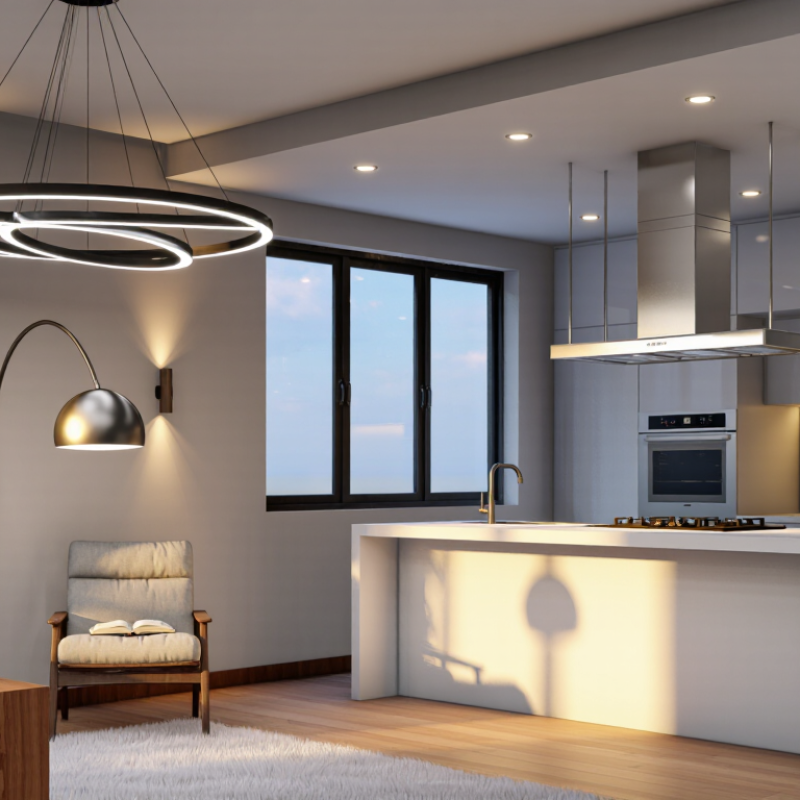
Choosing the right Lighting Fixtures begins with noticing how a room is actually used. A kitchen island needs clear task light, while a reading chair benefits from a focused lamp that does not glare across the page. The same fixture can feel warm in one room and harsh in another. Small details matter. Ceiling height, wall color, and natural daylight all affect the result.
Lighting designer Richard Kelly described light as “the indispensable ingredient in the design of any building.” His point remains useful: fixtures are not just decorative objects; they shape how people see and experience a space. This guide explores ten practical considerations, including room function, fixture scale, light direction, color temperature, brightness, energy use, controls, materials, installation, and maintenance. It also explains why a beautiful pendant may disappoint when it hangs too low or casts shadows on a work surface.
There is rarely one perfect choice. A showroom’s bright display can make a finish look different from the same fixture at home, and product specifications can be easy to misread. That deserves a second look. Measure the room, check the bulb and dimmer requirements, and consider how the light changes from morning to evening. These tips offer a grounded starting point, not a substitute for careful planning. A licensed electrician can help assess wiring and installation needs when a project calls for it.
Assess Room Use and Scale; Illuminance Is Measured in Lux (Lumens/m²)
Assess how each room is used before choosing a fixture. A kitchen island needs focused task lighting, while a bedroom often benefits from softer, layered light. Scale matters. A large pendant can crowd a narrow dining nook, while one small ceiling fixture may leave corners dim. Measure the room and note ceiling height, wall colors, and key work surfaces.
Illuminance is measured in lux, equal to lumens per square metre, according to the BIPM International System of Units. A rough estimate of light arriving on a surface is target lux multiplied by its area. The actual fixture output must account for shade losses and room finishes. EN 12464-1:2021 specifies 500 lux maintained illuminance for office reading, writing, and typing areas. That is a useful task-lighting reference, not a universal target for every home. Dark counters can feel underlit even when a calculation looks adequate.
Tip: Match the light to the task, then check it in place. Try reading at the desk after dusk; glare on a glossy page is easy to miss on paper. Add a dimmer or a separate task light if the room feels flat. Estimates help, but they are not the room itself.
10 Tips for Choosing the Right Lighting Fixtures - Assess Room Use and Scale; Illuminance Is Measured in Lux (Lumens/m²)
| Tip | Room or Use | Typical Illuminance | Example Area | Useful Light Reaching the Area | Fixture Selection Guidance |
|---|---|---|---|---|---|
| 1. Match the light to the room’s main activity. | Living-room ambient lighting | 100–200 lux | 20 m² | 2,000–4,000 lumens | Choose broadly diffused ceiling or wall fixtures for comfortable general light; add separate task lighting for reading or hobbies. |
| 2. Plan general and task lighting separately. | Kitchen ambient lighting | 200–300 lux | 12 m² | 2,400–3,600 lumens | Use even general illumination, then supplement work surfaces so the user’s body does not cast shadows on the countertop. |
| 3. Increase light where detailed work happens. | Kitchen countertop task area | 300–500 lux | 2 m² | 600–1,000 lumens | Consider under-cabinet or other directed fixtures, positioned to light the worktop evenly and reduce glare. |
| 4. Use softer ambient light where relaxation is the priority. | Bedroom ambient lighting | 100–200 lux | 14 m² | 1,400–2,800 lumens | Choose diffused fixtures and consider dimming; provide bedside lights separately for reading. |
| 5. Add a dedicated fixture for reading. | Reading chair or bedside task area | 300–500 lux | 1.5 m² | 450–750 lumens | A well-shaded floor or table lamp can direct light onto the book while limiting direct glare into the reader’s eyes. |
| 6. Check both general visibility and mirror lighting. | Bathroom ambient lighting | 200–300 lux | 6 m² | 1,200–1,800 lumens | Select fixtures suitable for their installation location and applicable damp or wet conditions; follow local electrical requirements. |
| 7. Light faces evenly at the mirror. | Bathroom mirror task area | 300–500 lux | 1.2 m² | 360–600 lumens | Consider lighting at both sides of the mirror or a suitable surrounding fixture to reduce harsh facial shadows. |
| 8. Keep circulation spaces comfortable and unobstructed. | Hallway or corridor | 50–100 lux | 5 m² | 250–500 lumens | Use evenly spaced ceiling or wall fixtures and avoid dark gaps, especially near stairs and changes in floor level. |
| 9. Choose a fixture size that suits the table and room. | Dining-area ambient lighting | 100–200 lux | 8 m² | 800–1,600 lumens | For a pendant, check the table dimensions and ceiling height; position it to illuminate the table without obstructing sightlines. |
| 10. Provide focused light for sustained screen or desk work. | Home-office task area | 300–500 lux | 8 m² | 2,400–4,000 lumens | Combine general light with an adjustable desk lamp, and position fixtures to minimize reflections on screens and glare. |
Planning note: Lux is illuminance: 1 lux equals 1 lumen per square metre. The lumen figures are simple estimates of useful light reaching the stated area (lux × area); actual fixture output may need to be higher because of light distribution, room surfaces, fixture losses, and maintenance. Values are typical planning ranges, not universal code requirements. Measure illuminance on the relevant work surface for the most useful comparison.