
For over 50 years, we have dedicated ourselves to providing Industry with best in class wire management solutions and to helping solve mission critical issues.

The needs of today’s schools and universities are changing fast. When it comes to anticipating and meeting those needs, MonoSystems is in a class of its own.
For the past five decades, we’ve made it our business to offer more value to our partners, which in turn provides greater value to their customers.
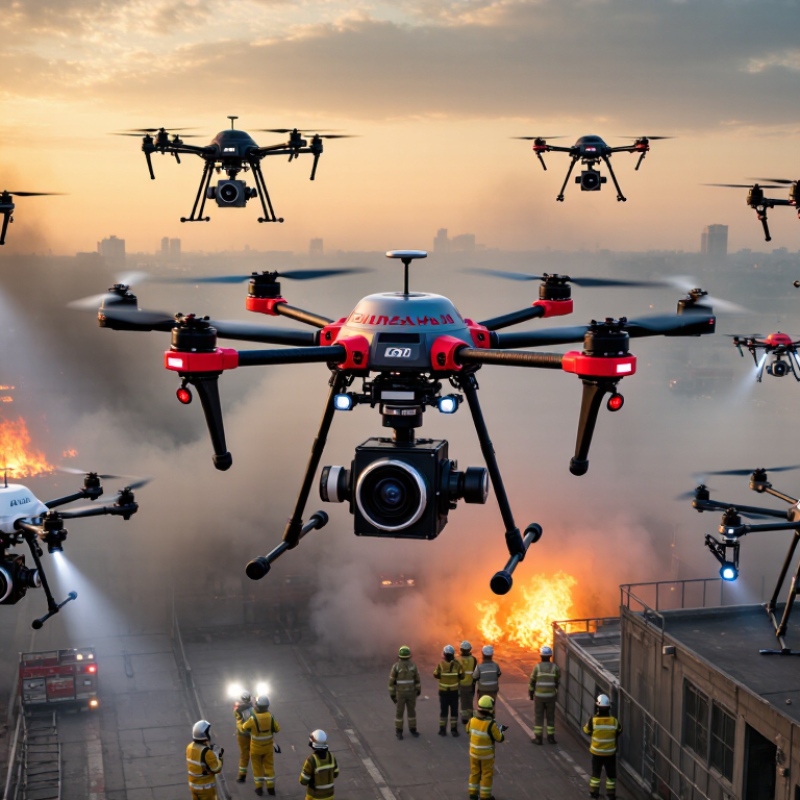
Firefighting Drone technology is changing how emergency teams observe heat, smoke, and dangerous structures. Aerial visibility can reveal roof hotspots before crews enter. It can also guide water application when visibility becomes poor. The need is substantial. The NFPA report Fire Loss in the United States During 2023 estimated 1,388,500 fires and approximately $22.1 billion in direct property damage. Meanwhile, the United Nations Environment Programme warns that extreme wildfire events could increase by 14% by 2030. These figures give this technology serious operational context.
This guide examines the Top 10 Firefighting Drones for Global Buyers through practical criteria. The comparison considers thermal-camera performance, flight endurance, wind resistance, payload options, obstacle avoidance, communications range, and software reliability. It also considers repair access, operator training, battery logistics, and local aviation requirements. Reports from the European Union Aviation Safety Agency and the Federal Aviation Administration repeatedly stress competent operations and risk management. A capable aircraft still depends on a trained crew. Technology cannot replace judgment.
Some limitations deserve attention. A thermal image may confuse hot metal with active fire. Smoke can weaken visual sensors and wireless links. Battery performance can decline sharply near freezing temperatures. No ranking can fit every department. A compact drone may suit a rural volunteer team, while an industrial brigade may need a tethered platform. Readers should verify manufacturer claims through demonstrations, independent testing, and service records. This is not merely a product list. It is a careful starting point for safer decisions, with a few unanswered questions left deliberately visible.
Top 10 Firefighting Drones for Global Buyers
Firefighting drones are unmanned aerial systems designed for safer, faster emergency observation. They combine optical cameras, thermal sensors, mapping tools, and secure communications. From above, crews can see roof temperatures, smoke movement, blocked roads, and possible survivors. Some platforms also carry lights, speakers, or small emergency supplies. They should support firefighters, not replace their judgment.
The need is substantial. The National Fire Protection Association reported about 1.39 million fires and nearly 29.8 million fire-department calls in the United States during 2023. In this environment, drones can reach unstable buildings before personnel enter. Thermal imaging may reveal hidden hotspots behind walls or below roofing. Real-time maps can guide water lines and evacuation routes. The National Institute of Standards and Technology also identifies unmanned systems as useful tools for public-safety situational awareness.
A drone is not magic. Heat reflections, dense smoke, rain, and limited battery life can distort information. Operators need practical training, preflight checks, backup batteries, and clear communication with incident commanders. Buyers should examine sensor accuracy, flight endurance, weather resistance, data security, and maintenance support. International teams must also verify local aviation and emergency-response requirements. A confident operator can still miss a victim. That uncomfortable risk deserves honest planning.
Firefighting drones now combine thermal imaging, optical zoom, and edge-based analytics. These systems locate hotspots through smoke, darkness, and unstable structures.
NFPA reported 1,388,500 fires in the United States during 2023. The figure shows why rapid aerial intelligence matters.
Thermal cameras can reveal a warm ceiling cavity before flames appear. Yet reflective metal, heavy rain, and dense smoke can distort readings.
Multispectral sensors help assess vegetation stress and wildfire boundaries. LiDAR maps terrain, power lines, and damaged buildings with useful precision. Real-time kinematic positioning improves flight accuracy near tall structures. Obstacle avoidance uses radar, stereo vision, or both.
Some platforms transmit video through mesh networks when cellular service fails. That sounds dependable. It is not always dependable. Mountain valleys, electromagnetic interference, and battery temperature can reduce coverage and endurance.
The European Environment Agency recorded about 504,000 hectares burned in the European Union during 2023.
This pressure encourages buyers to compare endurance, weather sealing, payload capacity, and software interoperability. Tethered drones can provide persistent overwatch, while compact aircraft support quick interior reconnaissance.
Artificial intelligence may classify smoke or heat patterns, but human confirmation remains essential. A false alarm can divert crews from a real emergency.
Buyers should also examine training records, maintenance plans, encrypted data handling, and compliance with local aviation rules. The best specification is useless if crews cannot deploy it safely.
Top 10 Firefighting Drones for Global Buyers
When evaluating drones for fire detection, begin with image quality, not advertised range. A thermal camera should reveal heat behind smoke, while a low-light sensor supports night operations. During testing, inspect roof gaps, window edges, and narrow alleys. These details often expose hidden hotspots. GPS accuracy also matters when teams must return to the same location.
Suppression requires a different checklist. Examine payload capacity, flight stability, water or foam delivery, and wind resistance. A useful drone should maintain position near a burning structure without creating unsafe turbulence. Tethered power can extend working time, but it may restrict movement. Battery-only models offer flexibility, yet their flight periods can shrink quickly in heat. Test both conditions. Marketing figures rarely reflect real fire scenes.
Rescue performance depends on communication and reliability. Look for a clear loudspeaker, bright searchlight, precise location sharing, and stable video transmission. Redundant navigation and automatic return features can reduce risks when smoke blocks visual contact. Every system should be tested by trained operators under local aviation and emergency-response rules. No scorecard is perfect. A drone may detect heat well but struggle with glare, rain, or dense smoke. Record those weaknesses openly. They can matter more than a polished demonstration.
Top 10 Firefighting Drones for Different Global Buyer Needs
Global buyers need different firefighting drones, not one universal model. The first three suit rapid scene checks: compact camera drones for municipal crews, thermal-imaging drones for night searches, and long-endurance drones for wide wildfire zones. Aerial views can reveal hot roofs, trapped vehicles, and wind-driven fire lines within minutes. Keep it simple.
The next four target specialized operations. Heavy-lift drones can carry larger water or suppressant payloads for limited spot cooling. Tethered drones can support long observation above industrial sites, ports, or crowded facilities. Indoor drones with obstacle sensing help inspect warehouses and tunnels where satellite navigation fails. Mapping drones create updated fire-perimeter data for command teams. Field trials often show an uncomfortable truth: more payload usually means less flight time. Buyers should compare real payload performance, not brochure figures.
The final three fit communication and resilience needs. Relay drones can extend radio coverage across valleys or damaged urban areas. Rugged, weather-resistant drones support wet, smoky conditions and repeated deployments. Modular systems help agencies replace cameras, batteries, or sensors without buying a complete aircraft. Reliable selection requires checking wind tolerance, thermal accuracy, battery logistics, spare-part access, pilot training, and local aviation approval. A drone that performs well in a calm test may struggle beside a 30-meter building. That gap deserves honest review.
Firefighting drones can improve situational awareness, but safe deployment requires more than thermal imaging. Buyers should verify aviation approvals, operator certification, radio permissions, and local privacy requirements before purchase. Rules differ between countries and sometimes between regions. A capable pilot must coordinate with incident commanders, not operate independently above emergency crews.
Deployment conditions matter. Strong wind, smoke, rain, and intense heat can reduce flight time and sensor accuracy. Thermal cameras may show hot surfaces, yet they cannot always identify structural weakness or trapped occupants. Keep a safe distance from power lines and aircraft operations. Clear communication prevents duplicated flights and dangerous airspace conflicts. Small details matter.
Maintenance should include battery inspections, firmware checks, propeller replacement, sensor calibration, and documented flight hours. Batteries need controlled storage, temperature monitoring, and approved transport procedures. A damaged battery is not a minor issue. It can become a serious fire risk. Cleaning soot from vents and lenses also protects performance. Some teams overlook this after a difficult incident.
Buyers should request training records, service procedures, spare-part availability, and realistic weather limitations. Test the drone with gloves, masks, and poor visibility. The controls may feel different under pressure. Plans are rarely perfect. A backup communication method and a grounded-drone procedure are essential when systems fail. Safety decisions should remain with trained emergency professionals.