
For over 50 years, we have dedicated ourselves to providing Industry with best in class wire management solutions and to helping solve mission critical issues.

The needs of today’s schools and universities are changing fast. When it comes to anticipating and meeting those needs, MonoSystems is in a class of its own.
For the past five decades, we’ve made it our business to offer more value to our partners, which in turn provides greater value to their customers.
welded wire mesh is a versatile material used across various industries. It consists of a grid pattern formed by welding wire intersections. This technique results in a robust structure, making it ideal for construction, agriculture, and fencing applications.
According to a market research report by Grand View Research, the global welded wire mesh market is projected to reach USD 6.47 billion by 2025. This growth reflects its increasing demand in infrastructure development and the rising need for effective solutions in animal husbandry. Quality and durability are essential for its successful application, yet many consumers still overlook these factors.
Despite its advantages, some users have faced challenges. For instance, improper installation can lead to structural issues. Attention to detail is crucial. In an ever-evolving market, staying informed about the latest innovations in welded wire mesh will enhance its practical applications and improve user satisfaction.
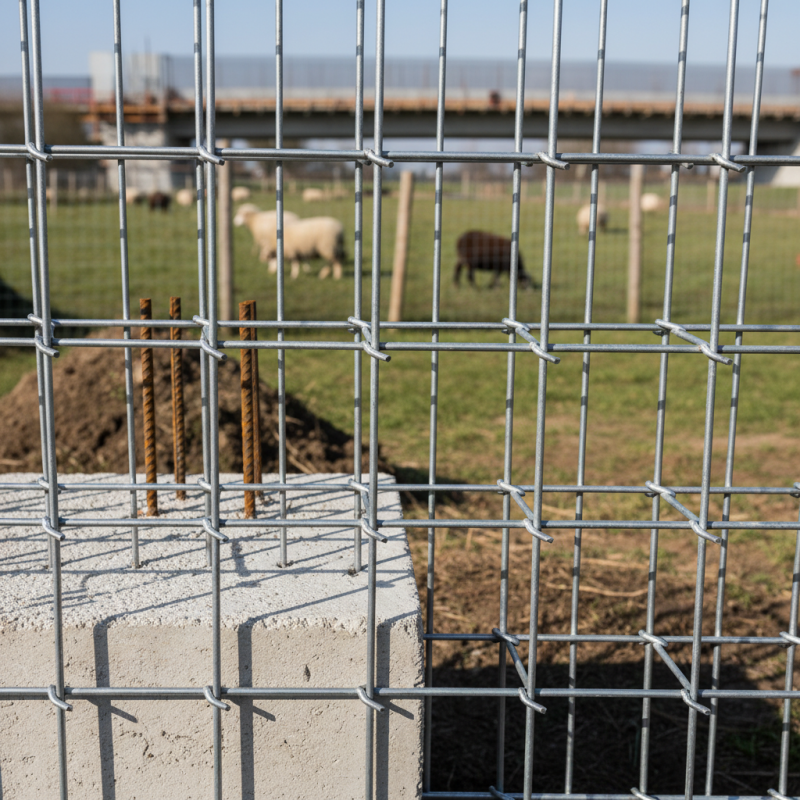
Welded wire mesh is a versatile material made of strands of wire welded together at intersections. It comes in various sizes and gauges, making it suitable for many purposes. The structure offers strength and flexibility, which are essential in construction and industrial applications. This mesh is typically used for fencing, concrete reinforcement, and even animal enclosures.
In construction, welded wire mesh enhances concrete slabs. It prevents cracking and increases stability. The placement is critical; incorrect positioning can lead to structural weaknesses. In landscaping, it serves as a support for plants, but reliance on it without proper planning can lead to failures, like plant slides.
While its advantages are clear, the choice of welded wire mesh requires careful consideration. Not all projects may benefit equally. Oversizing or undersizing can lead to wasted material and budget overruns. The mesh must be evaluated on a project-by-project basis. Understanding its limitations is just as important as recognizing its strengths.
| Dimension (mm) | Wire Diameter (mm) | Mesh Size (mm) | Material Type | Common Applications |
|---|---|---|---|---|
| 1200 x 2400 | 4 | 50 x 50 | Galvanized Steel | Construction, Fencing |
| 1000 x 2000 | 3 | 25 x 25 | Stainless Steel | Industrial Applications, Reinforcement |
| 900 x 1800 | 2.5 | 30 x 30 | PVC Coated | Agricultural Fencing, Garden Use |
| 1500 x 3000 | 5 | 100 x 100 | High Carbon Steel | Animal Enclosures, Security Barriers |
Welded wire mesh is a robust, versatile material used in various industries. Its manufacturing process involves several key steps. First, high-quality steel wires are selected based on the required specifications. These wires are then cleaned, ensuring minimal impurities. According to a recent industry report, nearly 30% of manufacturing defects arise from inadequate wire preparation.
Once prepared, the wires undergo a welding process. They are arranged in a grid pattern and welded at intersections using electric resistance welding. This method ensures strong bonds, with tensile strength often exceeding 500 MPa. However, the quality can vary depending on the welding technique and equipment used.
Post-welding, the mesh is often galvanized or coated to enhance corrosion resistance. Interestingly, some manufacturers overlook the importance of this step, leading to early degradation in certain environments. Proper inspection and testing during production remain critical to maintaining high standards and reducing waste. Regular audits reveal that around 15% of mesh produced may need reworking due to such oversights.
The chart above illustrates the various applications of welded wire mesh across different sectors. It is predominantly utilized in the construction industry, followed by agriculture and industrial applications. Understanding these applications helps highlight the importance of welded wire mesh in modern infrastructure.
Welded wire mesh is a versatile material used in various applications. It consists of wire strands welded together at intersections, creating a strong and durable structure. Different types of welded wire mesh are tailored for specific uses, showcasing its adaptability.
One popular type is reinforcement mesh. This type is commonly used in construction projects. It provides excellent support for concrete structures.
Another type is fencing mesh. Used for both safety and aesthetic purposes, fencing mesh secures properties while enhancing surroundings.
There are also specialized variations. For example, livestock panels are designed for animal containment. They are sturdy and weather-resistant. Often, these meshes are not perfect; issues such as rust or improper welding can arise. Each type serves a unique role, reflecting the diverse needs of industries and individuals.
Welded wire mesh is a versatile material in construction. Its grid structure allows for strength and flexibility. It's commonly used in concrete reinforcement. Data shows that over 70% of construction projects utilize some form of welded wire mesh. This statistic highlights its importance in enhancing structural integrity.
In flooring applications, welded wire mesh provides stability. It helps to minimize cracking and ensure even weight distribution. For walls, the mesh adds support while allowing for efficient airflow. The mesh can be found in fences and barriers too. Its adaptability makes it suitable for various environments. However, choosing the wrong mesh size can lead to inadequate support.
Tips: Always consult with a structural engineer to select the right type. Measure your space carefully before installation. Remember that while welded wire mesh adds strength, it is not a substitute for proper design. Inspect the mesh for any signs of wear or corrosion. Regular maintenance can extend its lifespan.
Welded wire mesh is widely used in various industries. It serves as a vital component in construction and agriculture. In construction, it provides reinforcement for concrete structures. Builders appreciate its strength and durability. It also supports road works and bridges. Farmers utilize it for fencing and keeping animals safe.
Other industries also find value in welded wire mesh. The automotive sector uses it for various parts and structures. It ensures safety and reliability in vehicles. Additionally, the hospitality industry employs it in decorative applications. From partitions to protective barriers, welded wire mesh adds both function and aesthetic appeal.
Despite its many uses, there are challenges to consider. Quality control remains essential to ensure product effectiveness. Some users report difficulties in installation. Proper tools and techniques are necessary for the best results. Engaging skilled workers can minimize these issues. Nonetheless, welded wire mesh continues to be a preferred choice across industries.