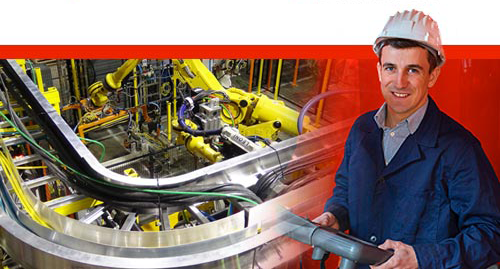
For over 50 years, we have dedicated ourselves to providing Industry with best in class wire management solutions and to helping solve mission critical issues.
The needs of today’s schools and universities are changing fast. When it comes to anticipating and meeting those needs, MonoSystems is in a class of its own.
For the past five decades, we’ve made it our business to offer more value to our partners, which in turn provides greater value to their customers.
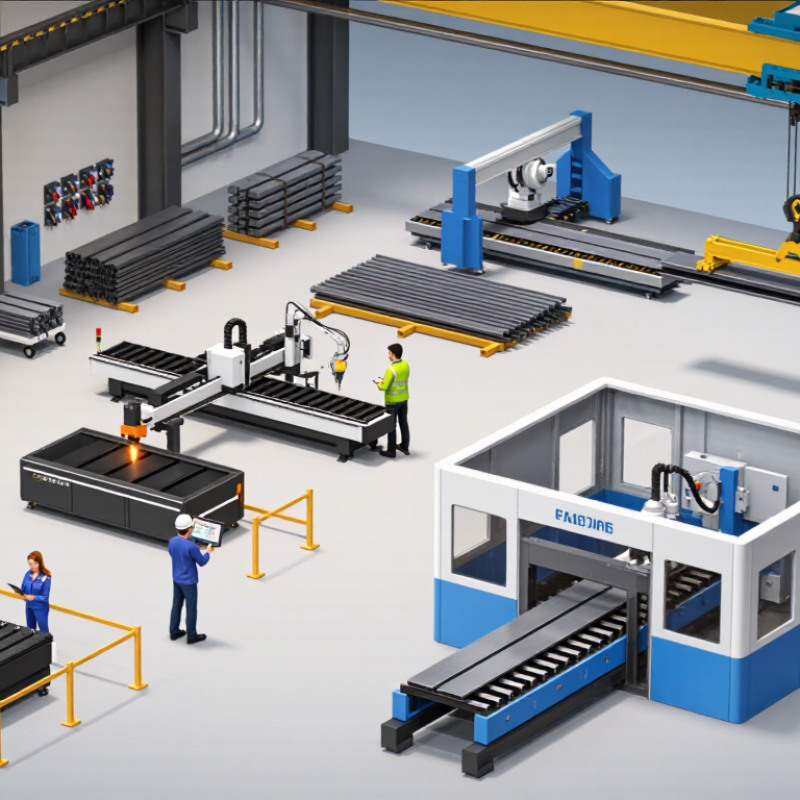
Choosing the right Steel Fabrication Equipment can shape productivity, accuracy, safety, and long-term operating costs. However, no single machine is best for every workshop. A small architectural fabricator may need a precise fiber laser, while a structural steel producer may prioritize a heavy-duty plasma table, beam line, or automated welding system.
The decision should begin with real production demands. Consider material thickness, steel grades, part dimensions, cutting tolerances, daily volume, available floor space, and operator skill. A machine that cuts three-millimeter sheet beautifully may struggle with thick plate. Likewise, impressive speed can become meaningless when setup changes consume valuable hours. Look closely at spindle or torch stability, extraction performance, software compatibility, maintenance access, and spare-parts support. Small details matter. A clogged filter can stop production.
Reliable selection also requires evidence beyond brochures. Ask suppliers for sample cuts, measured tolerances, cycle-time data, training plans, and references from comparable facilities. Experienced operators should test controls, loading procedures, and emergency stops before purchase. Industry standards and documented maintenance practices provide additional confidence, but they do not replace practical testing. A polished demonstration can hide inconvenient limitations.
The “best” choice may still involve compromise. Higher automation can reduce labor pressure, yet it may demand stronger programming skills and more complex servicing. Cheaper equipment may appear attractive, but downtime can quietly erase the savings. Careful comparison, qualified technical advice, and honest review of production goals create a more dependable investment. Mistakes happen. The goal is to make them smaller, visible, and manageable.
Choosing the best steel fabrication equipment starts with the job, not a catalog. A working shop may need cutting equipment, a press brake, drilling tools, welding systems, and lifting devices. Each tool controls a different stage, from raw plate preparation to accurate assembly. The right combination reduces rework, improves operator safety, and keeps dimensions stable. It sounds simple.
Cutting equipment separates steel through controlled heat, force, or abrasive action. A press brake bends flat sections into channels, frames, and boxed parts. Drilling and punching machines create repeatable holes for bolts and connections. Welding equipment joins prepared pieces, while positioners improve access and bead consistency.
Measuring tools matter too. Calipers, squares, gauges, and laser levels catch errors before they become expensive. Operators should inspect guards, emergency stops, blade wear, and electrical connections regularly.
Equipment selection depends on steel thickness, part size, production volume, floor space, and worker skill. A high-output machine may waste money in a small workshop. A manual tool may slow a large order. One lesson from practical fabrication work is that maintenance access is often overlooked. Dust, heat, and worn parts can stop production unexpectedly. That weakness deserves honest attention. Documented settings, routine inspections, proper training, and traceable measurements support reliable results. Even experienced teams sometimes need to question a familiar setup. A machine that handles 12-millimeter plate well may perform poorly on thin sheet, especially when speed replaces careful adjustment.
What Is the Best Steel Fabrication Equipment?
Key Equipment Used for Cutting, Forming, Welding, and Finishing Steel
In a practical steel shop, equipment should match thickness, tolerance, production volume, and material grade. Cutting often begins with a fiber laser, plasma cutter, band saw, or oxy-fuel system. Lasers produce clean edges on thinner plate. Plasma handles thicker sections quickly. Band saws suit structural profiles and reduce heat distortion. Oxy-fuel remains useful for heavy steel, although it creates a larger heat-affected zone.
Forming equipment changes flat stock into usable parts. Press brakes create accurate bends when operators check tooling, springback, and bend allowance. Plate rolls shape cylinders and curved shells. Hydraulic presses handle deeper forming jobs, but setup errors can mark surfaces or distort parts. Small test bends prevent expensive rework. They also expose weaknesses in our assumptions. No machine is perfect.
Welding equipment must suit the joint design and steel grade. Gas metal arc welding supports efficient production, while gas tungsten arc welding offers precise control on visible joints. Submerged arc systems can improve consistency on heavier assemblies. Clean fixtures, correct shielding gas, and verified parameters matter more than machine size. Finishing removes burrs, spatter, and sharp edges with grinders, deburring tools, shot blasting, or coating systems. Inspect dimensions afterward. A polished surface cannot hide poor fit-up. Calibration records and operator experience still matter.
Typical upper thickness capability for common equipment used in steel cutting, forming, welding, and finishing. The best choice depends on material grade, part geometry, accuracy, production volume, and required surface quality.
Indicative industry ranges for mild steel. Actual capacity varies by machine power, tooling, workpiece dimensions, process settings, and whether single-pass or multi-pass processing is used.
What Is the Best Steel Fabrication Equipment?
The best steel fabrication equipment depends on material, project requirements, and production volume. A small workshop may need a band saw, drill press, press brake, and welding system. A high-output facility may require automated cutting, bending, and material handling equipment. The most expensive machine is not always the best choice.
Material thickness should guide the cutting method. Fiber laser systems offer clean edges on thin and medium steel sheets. Plasma equipment handles thicker plate efficiently, although it may leave more heat distortion. For structural beams, sawing and drilling systems often provide better control. Stainless steel needs careful heat management and clean tooling to prevent contamination.
Match forming equipment to the part geometry. A press brake suits repeatable bends, while a roll-forming system supports long, consistent profiles. Check tonnage, bed length, bend accuracy, and operator access before purchasing. I once selected equipment based on maximum capacity alone. It worked, but setup time became frustratingly slow.
Production targets also matter. Low-volume work benefits from flexible machines and quick changeovers. Repetitive orders justify automation, sensors, and programmable controls. Measure actual cycle times, scrap rates, maintenance needs, and available floor space. Do not ignore power supply requirements. A machine can meet technical specifications and still disrupt the workshop. Leave room for future materials, but avoid paying for capacity that remains unused.
| Equipment Type | Primary Materials | Typical Cutting or Forming Range | Best Project Fit | Typical Production Role | Key Advantages | Main Trade-Offs | Recommended Selection Criteria |
|---|---|---|---|---|---|---|---|
| Fiber Laser Cutter | Carbon steel Stainless steel Aluminum | Commonly used for sheet and plate from approximately 0.5–25 mm, depending on laser power, material grade, and machine configuration. | Detailed sheet-metal parts, electrical enclosures, brackets, panels, and components requiring clean edges and tight tolerances. | High-mix, medium-to-high volume production with frequent job changes and CNC nesting. | Fast processing on thin and medium-gauge material; narrow heat-affected zone; excellent repeatability; produces small kerfs and detailed profiles. | Capital cost rises with power and automation; thick plate may be slower or less economical than thermal cutting alternatives; reflective materials require suitable machine design. | Match laser power, bed size, automation level, tolerance requirements, material thickness, and expected cutting hours. |
| CNC Plasma Cutter | Carbon steel Stainless steel Aluminum | Commonly used from approximately 3–50 mm; high-definition systems can provide improved quality on thinner and medium plate. | Structural components, base plates, machine frames, brackets, agricultural parts, and general fabrication. | Medium-to-high volume plate cutting, especially where part size and thickness exceed economical laser capacity. | Faster and more economical than many mechanical methods for conductive metal plate; suitable for large-format tables and automated nesting. | Produces a wider heat-affected zone than laser cutting; edge bevel and dross can increase with incorrect settings; electrically conductive materials are required. | Compare required edge quality, plate thickness, torch technology, consumable cost, table dimensions, and extraction capacity. |
| Oxy-Fuel Cutting Machine | Carbon steel Low-alloy steel | Often selected for carbon-steel plate from approximately 6 mm to more than 150 mm, subject to torch, gas, and process settings. | Heavy structural members, shipbuilding components, bridge parts, large base plates, and thick carbon-steel blanks. | Large-plate production, heavy fabrication, and applications where cutting speed is less important than thickness capability and operating cost. | Handles very thick carbon steel; comparatively low equipment cost; can support multiple torches and large cutting areas. | Not suitable for stainless steel or aluminum; slower on thin material; creates a larger heat-affected zone and requires fuel-gas safety controls. | Confirm carbon-steel compatibility, maximum plate thickness, gas infrastructure, preheating requirements, and post-cut cleanup allowance. |
| Waterjet Cutter | Carbon steel Stainless steel Aluminum Mixed materials | Commonly used for material up to approximately 100–150 mm, with practical limits depending on material, pump pressure, nozzle condition, and accuracy requirements. | Heat-sensitive parts, thick stainless steel, laminated materials, prototypes, and components requiring a cold-cut edge. | Low-to-medium volume production, complex profiles, and jobs where eliminating thermal distortion is more important than cycle time. | No thermal heat-affected zone; cuts many conductive and nonconductive materials; useful for thick sections and intricate shapes. | Higher operating cost from abrasive, water treatment, and nozzle wear; generally slower than laser or plasma; requires wastewater and abrasive management. | Evaluate thickness, heat sensitivity, surface finish, dimensional tolerance, abrasive consumption, pump capacity, and drainage provisions. |
| Hydraulic or Electric Press Brake | Carbon steel Stainless steel Aluminum | Typical machine capacities range from approximately 40 to 3,000 tons, with bending lengths commonly ranging from 1,000 to 8,000 mm. | Chassis parts, cabinets, channels, frames, covers, structural bends, and repeatable sheet-metal assemblies. | Job-shop work through high-volume production, depending on tooling, automation, back-gauge axes, and programming systems. | Produces accurate bends; supports many profiles through interchangeable tooling; CNC control improves repeatability and setup consistency. | Requires correct tonnage and tooling selection; long or thick parts may need multiple operators or special handling; springback must be controlled. | Size the machine by material thickness, bend length, inside radius, required tonnage, tooling style, part envelope, and daily bend count. |
| Mechanical or Hydraulic Shear | Carbon steel sheet Stainless steel sheet Aluminum sheet | Typical capacities range from approximately 1–25 mm thickness, with cutting lengths commonly from 1,500 to 6,000 mm. | Straight cuts, blanks, strips, preparation work, and repetitive rectangular parts. | High-throughput blanking where profiles are simple and a dedicated cutting cycle is faster than CNC thermal cutting. | Fast straight-line cutting; low consumable use; simple operation; useful as a front-end process for bending and welding. | Limited to straight cuts; cannot produce internal features or complex contours; setup quality affects squareness and burr formation. | Check maximum thickness, cut length, back-gauge accuracy, blade material, blade gap adjustment, and expected straight-cut volume. |
| CNC Tube and Section Laser | Carbon steel tube Stainless tube Aluminum profiles | Commonly processes round, square, rectangular, and selected structural sections from small tubing to approximately 300 mm across, depending on the machine. | Frames, handrails, furniture components, vehicle parts, welded assemblies, and profiles with slots or coping features. | Medium-to-high volume production of repeatable tubular assemblies with many holes, slots, or intersecting joints. | Combines cutting and feature-making in one setup; reduces secondary drilling, sawing, and manual layout; improves assembly accuracy. | Less suitable for very large structural sections; loading, unloading, and part support become more demanding as profile size increases. | Match chuck capacity, maximum profile size, material length, bundle loading, residual-part handling, and required feature complexity. |
| CNC Plate Drilling and Milling Line | Carbon-steel plate Structural sections | Often used for medium-to-thick plate and structural members requiring drilled holes, countersinks, tapping, or milled features. | Steel structures, connection plates, tower components, base plates, and assemblies with repeated bolt-hole patterns. | Medium-to-high volume structural fabrication where hole location and repeatability are critical. | Automates layout and drilling; improves hole-position accuracy; can combine marking, drilling, tapping, and milling operations. | Higher cost and floor-space requirements than standalone drills; benefits decrease when parts are highly variable or mostly contour-cut. | Review plate dimensions, spindle power, drilling diameter range, tapping capability, automatic tool change, and material handling. |
| MIG/MAG Welding System | Carbon steel Stainless steel Aluminum | Commonly used for thin sheet through heavy sections, with process settings and wire diameter selected for the joint and material. | Frames, brackets, machinery, enclosures, structural assemblies, and general production welding. | Low-to-high volume production; robotic cells are most effective for repeatable parts and stable joint designs. | High deposition rate; adaptable to many joint types; suitable for manual, semi-automatic, and robotic production. | Requires shielding gas and suitable ventilation; weld quality depends on joint preparation, operator skill, and parameter control. | Select by material, thickness, duty cycle, wire size, shielding gas, joint access, expected weld length, and automation potential. |
| Submerged Arc Welding System | Carbon steel Low-alloy steel | Typically used for long, continuous welds on medium-to-heavy plate and large structural components. | Beams, columns, pressure-related fabrication where permitted, large tanks, ship components, and long seam welds. | High-volume production with long, accessible weld seams and controlled fixture positioning. | High deposition rate; good weld penetration; low visible arc exposure; consistent results in dedicated production setups. | Limited portability and joint-position flexibility; not ideal for short, irregular, or difficult-to-access welds. | Confirm weld length, joint position, flux recovery, plate thickness, required deposition rate, and fixture repeatability. |
| Shot Blasting or Abrasive Blast System | Carbon steel Structural steel Fabricated assemblies | Used for removing mill scale, rust, weld spatter, and surface contaminants before coating or finishing. | Structural steel, fabricated frames, beams, plates, and production lines requiring consistent surface preparation. | Medium-to-high volume finishing, especially when coating adhesion and repeatable surface cleanliness are important. | Provides a consistent surface profile; reduces manual preparation; supports standardized coating processes. | Requires dust collection, abrasive management, noise control, and protection of sensitive features or finished surfaces. | Match chamber size, part weight, required surface preparation grade, abrasive type, throughput, and dust-control capacity. |
| Practical selection rule: Choose cutting equipment primarily by material type, thickness, edge-quality requirement, part geometry, and hourly volume. Choose forming and welding equipment by part size, repeatability, joint design, duty cycle, and the level of automation required. The stated ranges are typical industry planning values; final capacity should be confirmed against the machine configuration, material grade, tolerances, and applicable safety standards. | |||||||

The best steel fabrication equipment balances throughput, accuracy, safety, and lifetime cost. Rated cutting speed can mislead. Real performance depends on duty cycle, material thickness, setup time, and unplanned downtime. Ask suppliers for measured cycle times, not showroom claims. Test parts using your own steel grades and tolerances. Small errors become expensive scrap.
Accuracy deserves practical measurement. ISO 230-2 provides methods for evaluating positioning accuracy and repeatability in machine tools. Record hole-location deviation, cut-edge quality, and results after several operating hours. Thermal drift matters. It is often overlooked. Deloitte’s 2023 Smart Manufacturing and Operations Survey found that 86% of manufacturing executives viewed smart manufacturing as important for competitiveness within five years. However, connected equipment only helps when operators trust its data.
Safety must be judged beside productivity. Guarding, interlocks, fume extraction, access height, noise, and maintenance isolation require direct inspection. The U.S. Bureau of Labor Statistics reported roughly three recordable injuries per 100 full-time manufacturing workers in 2023. That figure is not a machine rating, but it shows why risk controls affect equipment value. Compare purchase price with energy use, consumables, calibration, software, labor, repairs, and scrap over five years. A cheaper machine may win the quotation and lose the workshop. The uncomfortable part is that every comparison contains assumptions. Recheck them with production records.
The best steel fabrication equipment depends on material thickness, profile complexity, production volume, and required accuracy. World Steel Association data reports that global crude steel production reached 1.892 billion tonnes in 2023. That scale creates very different fabrication needs across construction, transport, energy, and general manufacturing.
World Steel Association data reports that global crude steel production reached 1.892 billion tonnes in 2023.
Structural beams often require CNC plasma cutting, drilling lines, and high-capacity press brakes. Plasma handles thick plate efficiently, while drilling systems improve repeatable hole placement. For thin stainless or carbon steel sheets, fiber laser cutting usually delivers cleaner edges and narrower heat-affected zones. However, reflective materials and poor maintenance can reduce its practical advantage. A catalog rarely shows that weakness.
Structural beams often require CNC plasma cutting, drilling lines, and high-capacity press brakes.
For thin stainless or carbon steel sheets, fiber laser cutting usually delivers cleaner edges and narrower heat-affected zones.
Welding equipment should match joint design and workflow. Manual MIG or TIG welding suits prototypes, repairs, and low-volume assemblies. Automated cells become more valuable when dimensions repeat. The International Federation of Robotics reported 541,302 industrial robot installations worldwide in 2023, showing continued movement toward automated production. Still, automation is not automatically better. I have seen poorly planned cells increase setup time and restrict skilled workers. Check fixture access, extraction capacity, service support, and operator training before selecting equipment. A machine with impressive speed may perform poorly when the steel varies, tolerances tighten, or orders change suddenly.
The International Federation of Robotics reported 541,302 industrial robot installations worldwide in 2023, showing continued movement toward automated production.