
For over 50 years, we have dedicated ourselves to providing Industry with best in class wire management solutions and to helping solve mission critical issues.

The needs of today’s schools and universities are changing fast. When it comes to anticipating and meeting those needs, MonoSystems is in a class of its own.
For the past five decades, we’ve made it our business to offer more value to our partners, which in turn provides greater value to their customers.
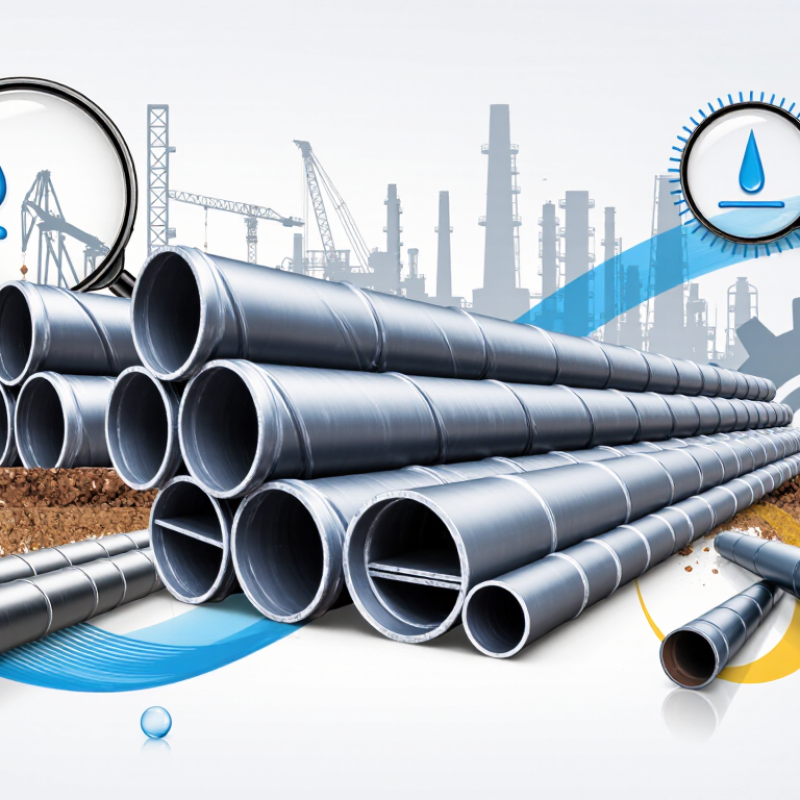
Choosing carbon steel pipe for sale worldwide is rarely a simple price decision. It is a practical choice shaped by pressure, temperature, soil, transport, and installation conditions. Carbon steel offers strong load-bearing performance for water lines, structural supports, oil and gas systems, and industrial process networks. Its familiar manufacturing process also supports broad availability, standardized dimensions, and easier welding in many regions.
Dr. Robert W. Revie, a recognized corrosion engineering authority, once stated, “Corrosion is a natural process that cannot be eliminated, but it can be controlled.” That principle matters when evaluating carbon steel pipe for sale. A pipe may look robust on a warehouse rack, yet moisture, salt air, and poor drainage can shorten its service life. Proper coating, cathodic protection, inspection, and wall-thickness selection remain essential. Strength alone is not enough.
Global buyers also value carbon steel because mills can produce many grades, diameters, and wall thicknesses. This flexibility helps contractors match pipe to design calculations and local supply conditions. However, “worldwide” does not mean universally suitable. Standards, certificates, welding procedures, and pressure requirements must be checked before purchase. A low-cost pipe with incomplete documentation may create expensive delays later.
There is a less comfortable truth. Carbon steel needs maintenance. It is not maintenance-free. Still, when engineers assess the full project cycle, its balance of strength, cost, availability, and repairability often remains persuasive. The best carbon steel pipe for sale is not merely the cheapest option. It is the verified option that fits the application, meets recognized standards, and performs reliably in its actual environment.
Why Choose Carbon Steel Pipe for Sale Worldwide?
What Is Carbon Steel Pipe? Grades, Standards, and Key Industry Data
Carbon steel pipe is made from iron and carbon, with small amounts of manganese, silicon, and other elements. It offers high strength, dependable weldability, and practical cost control. These qualities support water lines, structural frames, steam systems, and oil and gas infrastructure. A dark mill finish is common before coating or painting.
Grades matter.
ASTM A53 Grade B suits general mechanical and pressure applications. ASTM A106 Grade B is designed for high-temperature service. API 5L grades, such as X42 and X52, support pipeline transportation. EN 10216 and ISO 3183 provide additional requirements for international projects. These standards define chemistry, dimensions, testing, and performance. A similar grade name does not guarantee equal performance.
Pipe selection depends on more than grade. Diameter, wall thickness, operating temperature, pressure, and joining method must match the design. For example, Schedule 40 pipe has different pressure behavior across sizes. Welding quality also changes field reliability. Buyers should request mill test certificates, dimensional reports, hydrostatic test results, and coating details. Certificates are useful, but they still need verification. A low price may hide thin walls, poor traceability, or unsuitable tolerances. I would recheck every specification before ordering.
| Standard | Common Grade | Manufacturing or Product Scope | Carbon Limit (% max.) | Minimum Yield Strength (MPa) | Minimum Tensile Strength (MPa) | Typical Temperature or Service Feature | Common Applications |
|---|---|---|---|---|---|---|---|
| ASTM A53 | Grade B | Seamless and welded steel pipe for general mechanical and pressure service | 0.30 | 240 | 415 | General-temperature service; suitable for forming, welding, and threading when specified | Water lines, air lines, steam lines, structural supports, and low-pressure process piping |
| ASTM A106 | Grade B | Seamless carbon steel pipe for high-temperature service | 0.30 | 240 | 415 | Designed for elevated-temperature and pressure applications | Refineries, power plants, boilers, heat exchangers, and process piping |
| ASTM A333 | Grade 6 | Seamless and welded pipe for low-temperature service | 0.30 | 240 | 415 | Impact-tested for low-temperature service; commonly specified to −45°C impact-test temperature | Refrigeration systems, cryogenic-support piping, low-temperature process lines, and cold environments |
| API 5L | Grade B, PSL 1 | Seamless and welded line pipe for pipeline transportation systems | Specification-dependent | 245 | 415 | Pipeline-focused requirements for pressure containment, testing, and traceability | Oil, gas, water, and slurry transmission pipelines |
| EN 10216-2 | P235GH | Seamless steel tubes for pressure purposes at elevated temperatures | 0.16 | 235 | 360–500 | Pressure equipment and elevated-temperature service under European specifications | Boilers, pressure vessels, thermal systems, and industrial process equipment |
| EN 10217-1 | P235TR1 | Welded circular steel tubes for pressure purposes at room temperature | 0.16 | 235 | 360–500 | Room-temperature pressure service; inspection and testing requirements apply | Low-to-medium pressure water, air, gas, and industrial piping systems |
| JIS G3454 | STPG 370 | Carbon steel tubes for pressure service | 0.25 | 215 | 370 | Pressure service with grade and dimensional requirements defined by Japanese standards | Steam, water, air, gas, and general industrial pressure piping |
Carbon steel pipe remains widely selected because it offers practical strength, machinability, and dependable availability. ASTM A53 suits general pressure service, structural work, and water or air lines. It is available in welded and seamless forms. ASTM A106 is seamless pipe designed for higher-temperature service. That difference matters when heat cycles are frequent.
For Grade B, A53 and A106 commonly show a minimum yield strength of 240 MPa and tensile strength of 415 MPa. Their basic strength figures look similar. However, A106 provides a stronger design basis for elevated temperatures. Grades A, B, and C also offer different strength levels. Temperature ratings are not fixed by grade alone. Wall thickness, pressure, corrosion allowance, and the selected design code can change the safe limit. A pipe may pass a room-temperature check but fail the real service requirement. That is an easy mistake.
Tips: Check the complete material certificate, not only the pipe stamp. Confirm grade, manufacturing method, wall thickness, and heat treatment. Use the pressure-temperature tables required by your project code. For steam or hot oil, A106 is often the more suitable starting point, but not automatically the final choice. An engineer should verify every operating condition. Suppliers sometimes describe “high temperature” too loosely. Question that wording.
Why Choose Carbon Steel Pipe for Sale Worldwide?
How Carbon Steel Pipe Is Manufactured to API 5L and ASTM Standards
Carbon steel pipe begins with controlled steelmaking. The World Steel Association reported 1,892 million tonnes of crude steel production in 2023. This scale supports stable raw-material supply, but quality still depends on process control. For seamless pipe, heated billets are pierced and rolled into hollow sections. For welded pipe, steel plate or coil is formed and joined along a controlled seam. The route matters.
API 5L manufacturing requires documented chemistry, dimensions, mechanical properties, and traceability. Pipes may be produced under PSL1 or the stricter PSL2 requirements. Testing can include hydrostatic pressure checks, tensile testing, impact testing, and nondestructive examination. ASTM A106 commonly covers seamless carbon steel pipe for high-temperature service, while ASTM A53 addresses general mechanical and pressure applications. These standards are not interchangeable. Not cosmetic.
During inspection, each heat number should follow the pipe from steelmaking to shipment. Surface checks can reveal laminations, undercut, or poor weld profiles. Wall-thickness measurements also matter, especially after forming and heat treatment. The Energy Institute’s Statistical Review of World Energy 2024 reported global natural-gas consumption near 4.0 trillion cubic metres in 2023, sustaining demand for dependable transmission materials. Still, a certificate is not magic. A missed marking or incomplete test record can weaken confidence. Careful suppliers verify mill documents, calibration records, and loading conditions before worldwide delivery.
Carbon steel pipe remains a practical choice for projects worldwide because it combines strength, availability, and cost control. However, pressure capacity depends on more than the material label. Wall thickness, outside diameter, and pipe schedule must work together under actual service conditions.
A thicker wall generally handles higher internal pressure because it resists hoop stress more effectively. Diameter matters too. With the same wall thickness, a larger pipe experiences greater circumferential stress at identical pressure. Engineers often use preliminary formulas, such as P ≈ 2St/D, where P is pressure, S is allowable stress, t is wall thickness, and D is diameter. This estimate is not a final design. Temperature, corrosion allowance, weld quality, and material strength can change the result.
Schedule numbers identify standardized wall thicknesses, but schedule alone does not guarantee safe pressure performance. I have seen selection errors happen when buyers compare schedules without checking actual dimensions.
Tips: Confirm outside diameter and measured wall thickness before ordering. Request material certificates and pressure ratings for the intended temperature. Check the applicable engineering code and local requirements. Do not assume a heavier schedule always solves every design problem. Very thick walls may increase weight, welding effort, and cost. A corrosion allowance may also be overlooked, especially in damp or chemically active service. Recheck the calculation when operating conditions change.
Carbon steel pipe remains a practical choice when projects require strength, manageable costs, and dependable supply. Its high tensile capacity supports water lines, structural frames, process systems, and pressure service. Standard grades such as ASTM A53 and ASTM A106 also simplify specification, inspection, and replacement across different regions.
The supply base is substantial. The World Steel Association reported approximately 1.89 billion tonnes of crude steel production worldwide in 2023. The U.S. Geological Survey estimated global iron ore mine production at about 2.5 billion metric tonnes that year. These figures do not guarantee every diameter is available locally. However, they show why carbon steel pipe can be sourced through many established markets.
Cost performance is another strong argument. Carbon steel is usually less expensive than stainless or specialized alloy pipe, especially in common schedules and larger diameters. Fabricators also understand its welding, cutting, and testing requirements. A pipe yard can often match standard dimensions quickly. That saves time.
But the material is not perfect. Moisture, salts, and aggressive chemicals can cause corrosion without coating or cathodic protection. A low purchase price may become expensive after repeated repairs. Experienced buyers should check wall thickness, mill certificates, hydrostatic test records, end preparation, and applicable standards. Delivery claims also deserve verification. A supplier’s stock list may not reflect actual, inspection-ready inventory. This small gap can disrupt an entire installation.