For over 50 years, we have dedicated ourselves to providing Industry with best in class wire management solutions and to helping solve mission critical issues.

The needs of today’s schools and universities are changing fast. When it comes to anticipating and meeting those needs, MonoSystems is in a class of its own.

For the past five decades, we’ve made it our business to offer more value to our partners, which in turn provides greater value to their customers.
Choosing among China’s top 10 ladder tray manufacturers takes more than comparing prices. Buyers should examine load ratings, material thickness, finish quality, connection hardware, and the clarity of technical documentation. A well-made tray should support specified cable loads without sagging, while leaving cables accessible for inspection and future changes. Small details matter: a rough cut edge or poorly aligned splice plate can complicate installation.
This introduction compares manufacturers through practical criteria, including product range, customization, quality controls, export experience, and after-sales support. Catalog claims alone are not enough. Ask for current test reports, dimensional drawings, and clear guidance on support spacing. Then compare like with like. Not every project needs the same tray, and the cheapest quote may omit fittings or finishes required for the actual environment.
A named expert quotation should be verified against a reliable source before publication. No source material was provided here, so attributing a statement to a specific ladder tray specialist would risk inventing a quote. This comparison instead uses a straightforward principle: “Specify the tray for the load, environment, and installation—not the catalog photo.” Check each supplier’s evidence against your project requirements. It is a useful start, not a substitute for engineering review.
What Are Ladder Cable Trays and Where Are They Used?
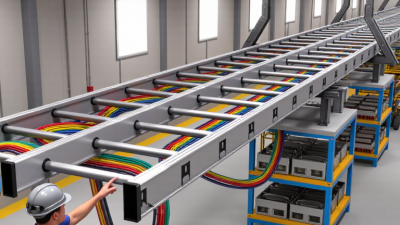
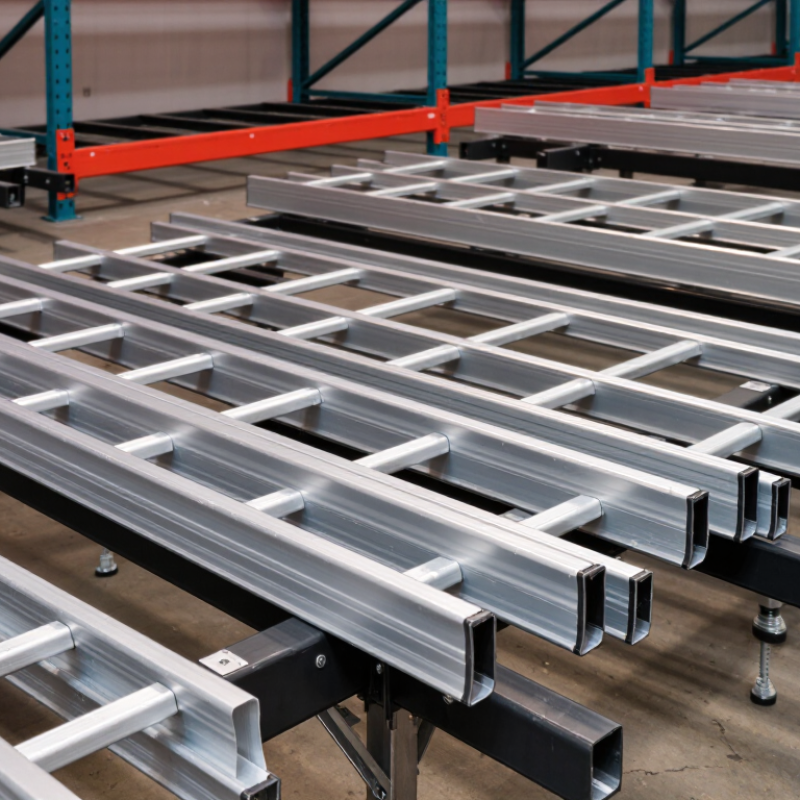
A ladder cable tray is a support system with two side rails joined by evenly spaced rungs. Its open design lets air circulate around cables and makes inspection easier. Installers can secure cables with ties, then access them without removing a solid cover. Simple, but not careless.
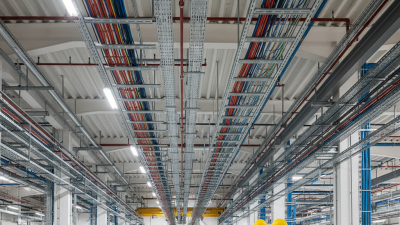
These trays commonly carry power and control cables in factories, warehouses, utility rooms, and large commercial buildings. They may run overhead along steel beams or through service corridors, where cable routes need to remain visible and accessible. Outdoors, the finish and material should suit moisture, chemicals, and temperature changes. A suitable choice depends on cable weight, support spacing, and the route’s exposure—not just tray width. Check the manufacturer’s load data and applicable project requirements before installation.
The rungs provide regular fixing points, but they can leave small cables less supported than a solid-bottom tray. That detail matters. Engineers should consider cable size, bend radius, heat, and possible vibration when planning the route. Keep sharp edges away from insulation, and provide proper bonding where the electrical design requires it. Even a well-made tray can sag if its supports are too far apart; that is an easy detail to overlook.
Ladder cable trays support and route cables in industrial facilities, commercial buildings, and infrastructure projects. Common nominal widths shown here are listed in NEMA VE 1; the appropriate width depends on cable quantity, cable fill, loading, and installation requirements.
Selecting China’s top ladder tray manufacturers requires more than comparing catalog prices. The selection should examine production capability, engineering support, quality controls, and delivery reliability. Look for clear specifications covering tray width, rail height, rung spacing, material thickness, and available finishes. Practical evidence matters. Load-test data should state the support span and test conditions, since these details affect comparisons. A polished brochure alone proves little.
A credible assessment also checks factory processes, sample consistency, inspection records, and project experience. Review how manufacturers handle custom bends, connectors, and changes in order volume. Ask whether drawings and test documents match the supplied product. Small details count. A tray edge with uneven coating or a poorly aligned rung can signal process issues. Where possible, compare samples and verify references rather than relying only on online claims. This method has limits: public information may be incomplete, and a strong supplier for one project may not suit another. Installation environment, corrosion exposure, and required load capacity should shape the final shortlist.
The framework below shows how manufacturers can be screened and compared. The weights are indicative evaluation criteria, not verified scores or a ranking of specific companies.
| Selection dimension | Indicative weight | What to evaluate | Evidence to check |
|---|---|---|---|
| Product range and specifications | 20% | Availability of ladder trays in different widths, side-rail heights, lengths, materials, and finishes. | Current catalogs, product drawings, dimensional tolerances, and written technical specifications. |
| Material and corrosion protection | 15% | Suitability of material and finish for the intended indoor, outdoor, or corrosive environment. | Material grades, coating or galvanizing details, applicable test reports, and project-specific requirements. |
| Load and structural performance | 15% | Published load data, support-span assumptions, deflection limits, and consistency of testing methods. | Load tables, test documentation, engineering calculations, and clearly stated installation conditions. |
| Quality management and traceability | 15% | Documented production controls, inspection processes, nonconformance handling, and batch traceability. | Valid quality-system certificates where applicable, inspection records, and sample or audit documentation. |
| Manufacturing capability and capacity | 10% | Ability to manufacture required configurations, maintain consistent output, and meet realistic production schedules. | Production information, process descriptions, stated lead times, and capacity confirmation for the requested order. |
| Compliance and technical documentation | 10% | Relevance of declared standards, product documentation, and project-specific compliance support. | Certificates and declarations verified for scope, validity, issuing body, and applicability to the offered product. |
| Customization and engineering support | 5% | Support for non-standard dimensions, accessories, layout coordination, and technical questions. | Engineering response process, customization limits, drawing review, and sample approval procedures. |
| Delivery, packaging, and export readiness | 5% | Clarity of delivery terms, protective packaging, shipment coordination, and export documentation support. | Written quotations, packaging details, proposed delivery schedule, and required shipping documents. |
| Total | 100% | Use the same requirements and verification process for every candidate to support a consistent comparison. | |
Note: Certifications, test results, load ratings, and delivery commitments should be checked against current documents and the specific product configuration being quoted.
Profiles of China’s top 10 ladder tray manufacturers should compare measurable capabilities, not just catalog breadth. Grand View Research’s Cable Tray Market report estimated the global market at approximately US$4 billion in 2023, reflecting demand across industrial and commercial infrastructure. That figure is broad, not specific to ladder trays or Chinese suppliers. It provides context, not proof of any manufacturer’s quality.
A useful profile checks tray material, rung spacing, finish, load ratings, and production consistency. Ask how test results were obtained and whether they match the proposed span and installation conditions. IEC 61537:2023 sets requirements for cable tray and ladder systems, offering a practical reference when reviewing product documentation. Look for clear drawings, traceable material records, and sample inspection details. Small things matter: a rough cut edge can complicate site handling, while an unsuitable coating may not suit a humid plant room. Still, a datasheet can flatter. Public information rarely shows how consistently a factory maintains tolerances across large orders, so buyers should treat published capacity as a claim to verify, not a guarantee.
Comparing China’s ladder tray manufacturers is less about headline capacity than repeatable engineering. Check rung spacing, side-rail thickness, weld consistency, straightness, and rated load at the stated support span. A tray rated for one span may deflect more at another. Request load tables, material certificates, coating-thickness records, and sample inspection reports. NEMA VE 1 offers a useful benchmark for metal cable tray design and testing, but supplier claims still need independent verification.
Manufacturing capability also means handling different widths, custom bends, surface finishes, and short production runs without inconsistent dimensions. The IEA’s 2025 Energy and AI report estimates data centres used about 415 TWh of electricity in 2024, with demand potentially reaching 945 TWh by 2030. This points to expanding infrastructure needs, not guaranteed tray orders. Compare factories using a common drawing and ask how they control quality between batches. The comparison is imperfect; a polished sample does not prove stable mass production.
Tips: Ask for a recent inspection record and a production sample. Check cut edges and welds under good light. Small details matter. Confirm packaging and lead times, too. A capable supplier should explain limitations clearly, not promise that every specification is easy.
Choosing a ladder tray manufacturer starts with the project conditions, not the lowest quoted price. Record cable weight, support spacing, route changes, and exposure to moisture or chemicals. Ask for load tables that match the proposed tray width, rung spacing, and span. A generic capacity figure is not enough.
MarketsandMarkets’ Cable Tray Market report estimated a global market of USD 4.3 billion in 2023 and forecast USD 5.8 billion by 2028. Growth suggests expanding demand, but it does not prove any supplier’s quality. Request material certificates, coating specifications, dimensional tolerances, and relevant load-test records. For Chinese manufacturers, confirm factory capacity and whether samples match production batches. Small differences matter.
Inspect the details. Are cut edges protected? Do bends and tees fit the straight sections? Ask how packaging prevents damage during long-distance shipping, and get lead times in writing. For coastal or industrial sites, check that the corrosion protection suits the actual environment. Compare equivalent specifications, not just unit prices. A site visit can help, though it may not reveal every production issue. No checklist catches everything. Keep room for review after the first sample and before bulk ordering.